Fill out one form instead of calling around for a boiler tune-up.
Most boilers in Connecticut run best with the water temperature set between 160 and 180 degrees in the coldest months, dropping toward 140 as it warms up into spring. That's the setting on the aquastat, not the thermostat on the wall, and a lot of homeowners never touch it after the contractor who installed the system left.
Getting that number right matters more here than in a lot of places. Connecticut winters ask a boiler to run for months at a stretch, and the electric and gas rates here are among the highest in the country. A boiler set too high burns fuel heating water past what your radiators or baseboards need. Set too low, it runs longer to catch up, and some rooms never quite get warm.
The right setting depends on your system though, the kind of heat emitters you have, how your house holds heat, whether the boiler was sized for the place. That's not something to guess at from a search result. It's the kind of thing a technician figures out by looking at your actual setup, and it's usually part of a maintenance visit anyway, along with checking the pressure, the pump, and the parts that wear out from a winter's worth of running.
Finding someone to do that in Connecticut usually means a string of phone calls, explaining the same boiler and the same question to three or four different companies, then sitting with quotes that don't quite compare because nobody looked at the same things. Some won't call back. Some will quote a service call without seeing the equipment.
This page connects you with a licensed contractor near you who works on boilers all winter in Connecticut homes and knows which settings tend to be off and why. You explain the system once, to the person who'll actually be looking at it. The button below starts that.
Most boilers here run well with the aquastat set between 160 and 180 degrees once the cold settles in for good, usually December through February. Set it lower and the boiler has to cycle more to keep the house at temperature, which wears on the igniter and the circulator pump. Set it too high and you're paying to heat water hotter than the radiators or baseboards need, since most Connecticut homes don't need full output until it's near freezing outside. As the weather turns in March and April, bringing it down toward 140 saves on the gas or oil bill without losing comfort, because the house isn't losing heat as fast. The right number moves with the season. A boiler that's been tuned and checked before the cold sets in holds whatever temperature you set it to much more reliably than one that hasn't been looked at since last winter.
Set right, the boiler holds a steady water temperature and the pipes and expansion tank stay at the pressure they were set up for.
Set wrong, the boiler short cycles and strains the joints and fittings until one of them lets go.
Is your aquastat even set where it should be?
Go look at the aquastat on the boiler itself. If it's set below 160 this time of year, you'll likely notice the house takes longer to come up to temperature after the thermostat calls for heat, and the boiler kicks on and off more than it should through the evening. You might hear it short cycling, on for a few minutes, off, on again. That extra cycling puts wear on the igniter and the joints and fittings over a Connecticut winter that runs long. If the setting's been wrong since before you moved in or since the last person touched it, you won't notice anything dramatic right away. What you'll notice is the gas or oil bill climbing while the house still feels a step colder than it used to.
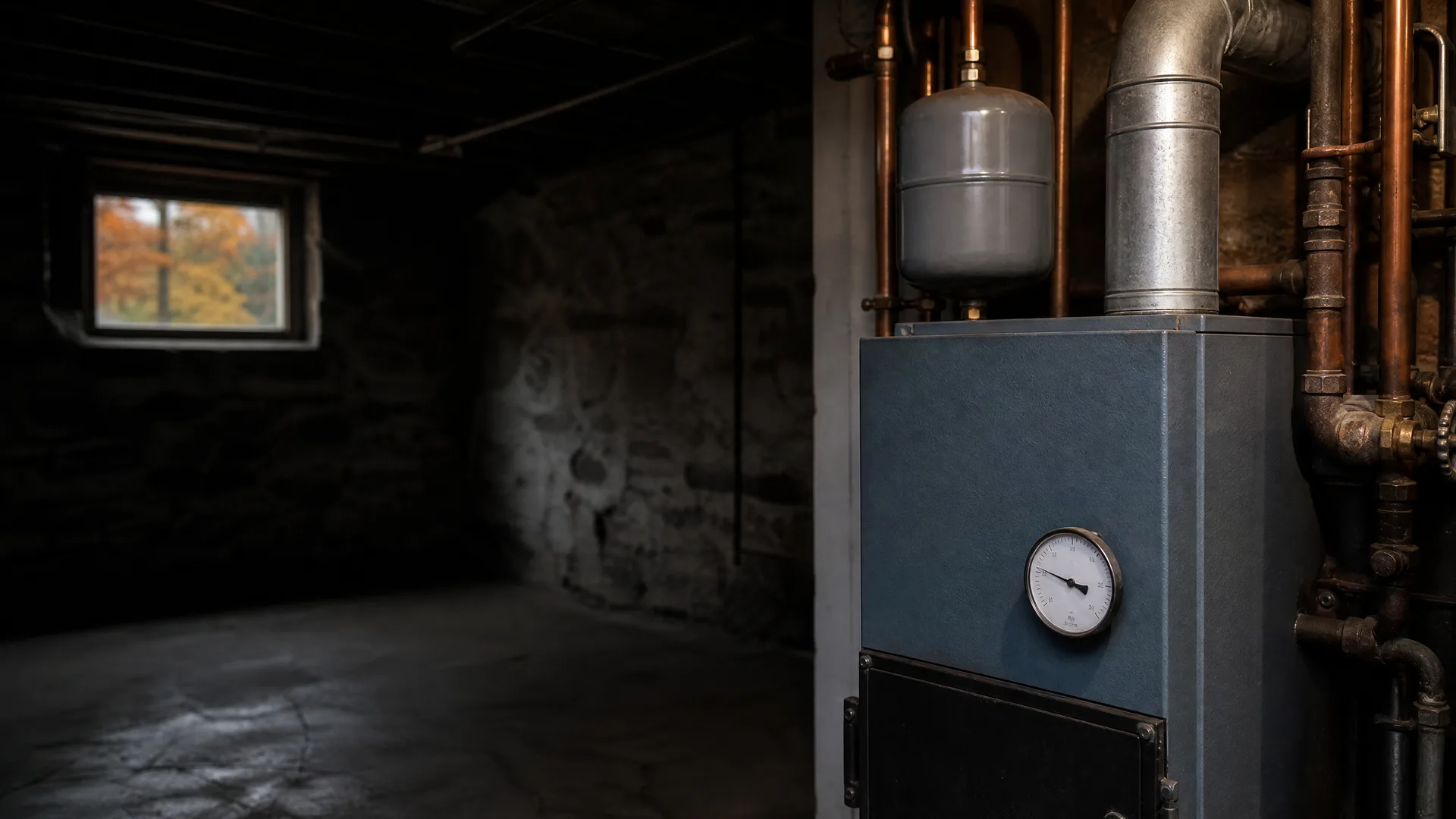
You go down to check the aquastat on a gray October afternoon, the kind where the cold hasn't settled in yet but the furnace is already cycling more than it did in September. The basement smells like it always does this time of year, a little like dust burning off the pipes for the first time since spring. You crouch by the boiler and find the pressure gauge, its round face a little dusty, the needle sitting low on the dial. You tap the glass out of habit. It doesn't move. Upstairs, the thermostat reads a few degrees under what you set it to, and you stand there wondering if it's the pressure, the aquastat, or something else you can't see from here, and whether you're the one who's supposed to fix it or call someone who knows this boiler's quirks already.
A licensed local pro takes the request for your boiler tune-up.
Sending the form costs nothing.
An aquastat holding steady at 170 keeps the boiler firing in longer, even runs instead of short, frequent bursts, and that's what the high limit and low limit settings on the control are there to do.
A boiler that short cycles all winter puts more wear on the igniter and the circulator pump than one that runs long and steady, and over a Connecticut winter those extra cycles add up fast.
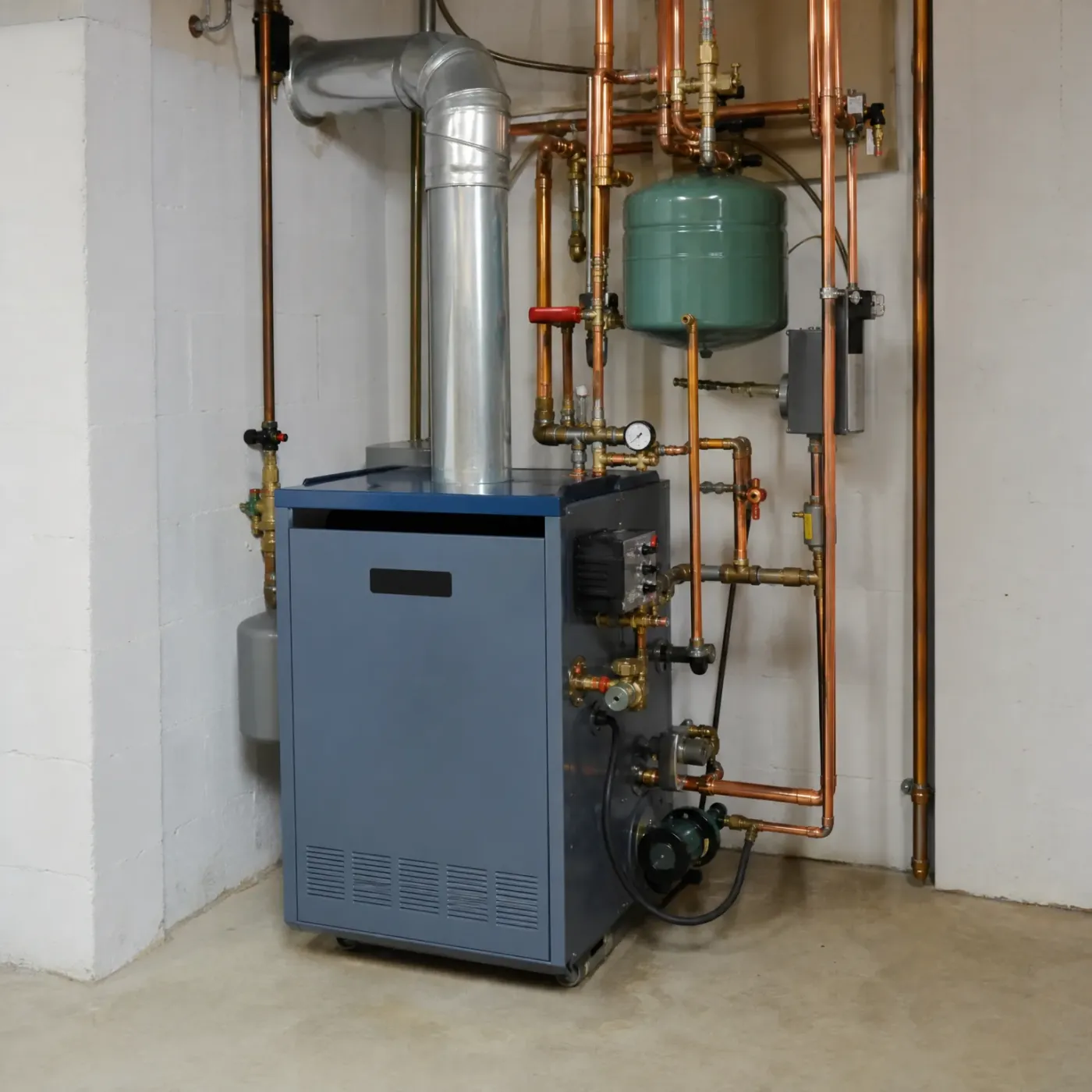
Running the way it should
The pipes stay tight, the pressure gauge holds steady, and the expansion tank does its job. A boiler kept at the right temperature and checked each season looks like this: clean fittings, no rust at the joints, nothing leaking onto the floor.
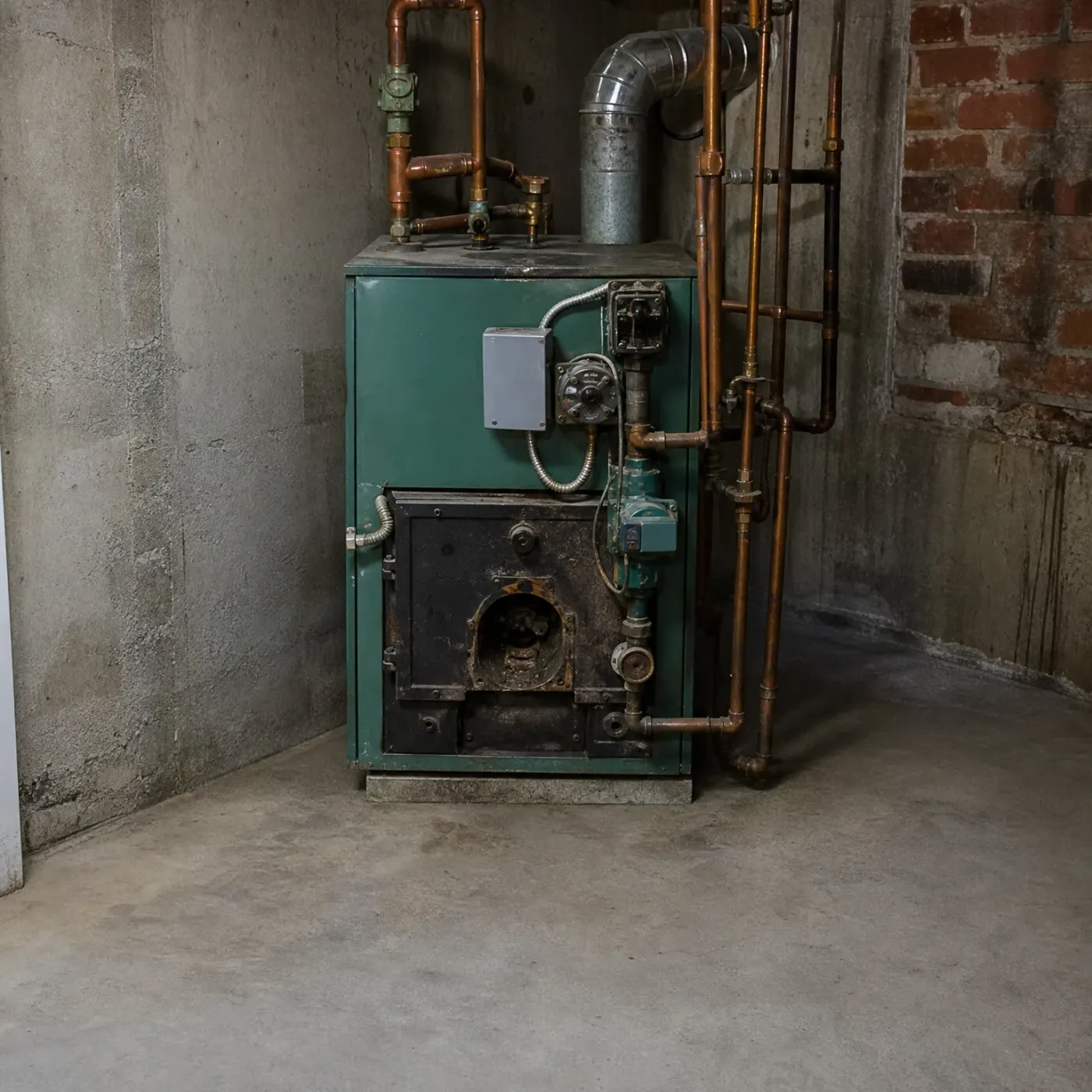
What years of neglect look like
The firebox door is eaten through with rust and the metal around it has given up. A boiler that gets ignored long enough doesn't just lose efficiency, it gets to a point past the aquastat setting where a tech can still help. At some point it needs replacing, not adjusting.
Winter nights average 23°F statewide
At 23°F overnight, your boiler is firing most of the night just to hold the house steady. That kind of cold is exactly what the 160 to 180 range on the aquastat is meant for. Set it lower and those long winter nights are when you'll feel it first, with rooms slow to come back up to temperature.
NOAA nClimDiv 1991-2020 county normals weighted by homes
Maintained and even
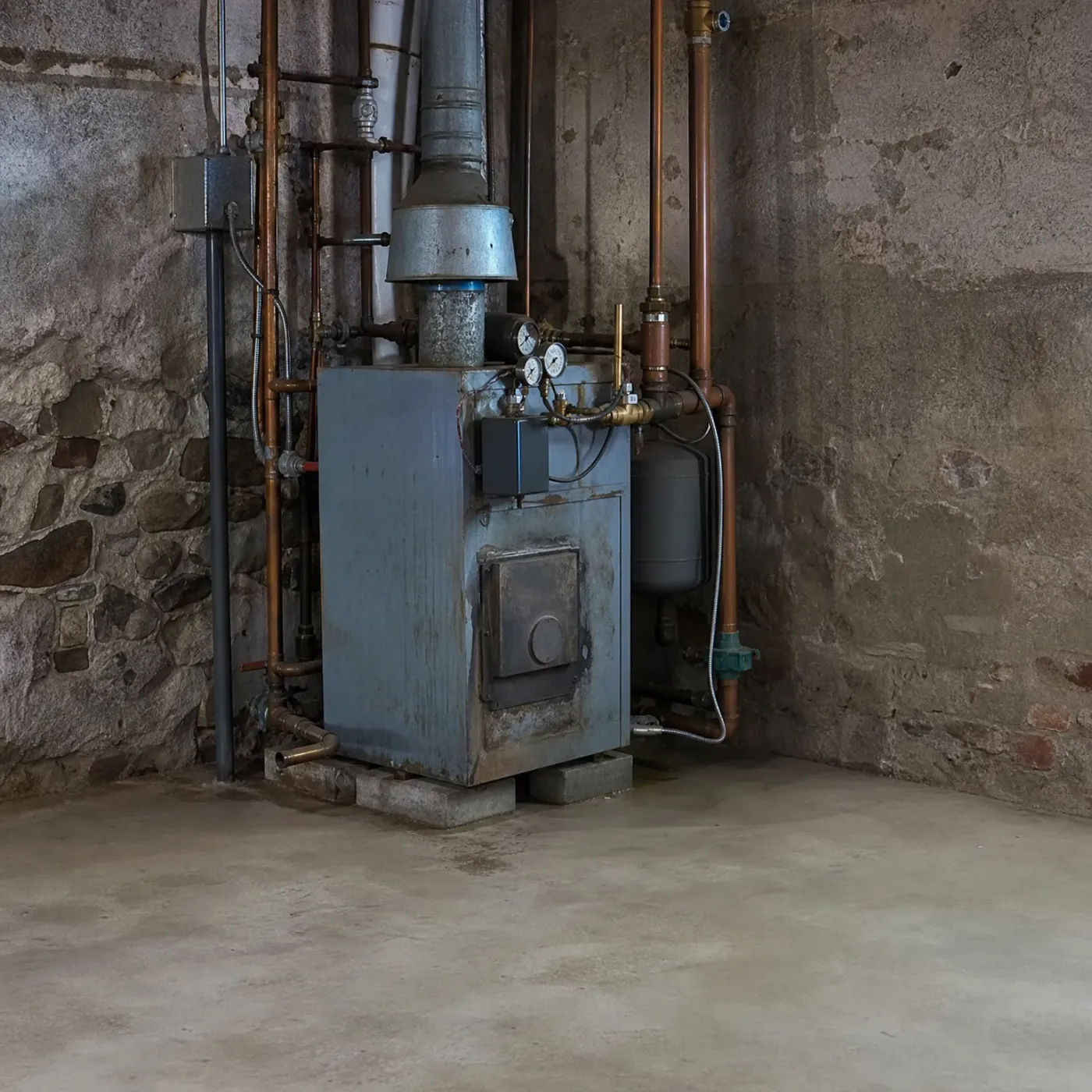
This is what a boiler looks like when it's been checked every season. The pipes and fittings are clean, the expansion tank is doing its job, and the aquastat is set where it should be for the cold. Someone who works on these every winter can catch a weak pump or a loose fitting before it costs you a night without heat.
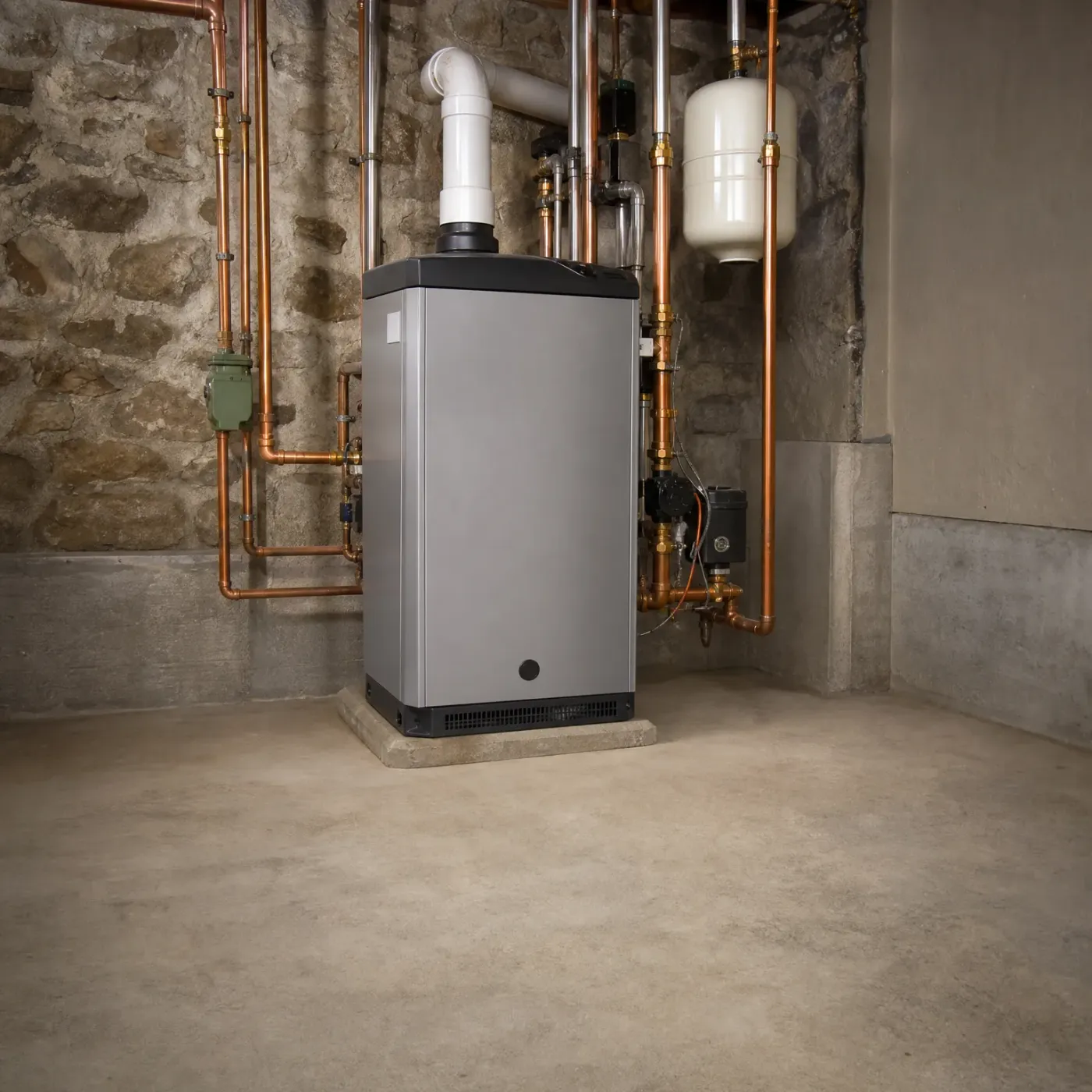
Old and overdue
Cast iron like this can run for decades, but the pressure gauges and valves show their age if nobody's looked at them in a while. A boiler this old with an aquastat set wrong is working harder than it needs to, and a local tech who knows these older systems can tell you what's actually wrong before you spend money guessing.
160 to 180 until the cold breaks
Keep the aquastat at 160 to 180 while the cold holds on, then start easing it toward 140 as the days warm. That's the whole answer, and checking it takes a minute next time you're near the boiler.
Finding out whether a boiler is holding that range, or short cycling, or losing pressure somewhere in the pipes, is harder to judge on your own than the setting itself. A local contractor who works on boilers all winter can look at yours, tell you what the aquastat and the pressure gauge are actually doing, and take care of it, so you're not calling around to three companies, explaining the same thing three times, and sorting through quotes to figure out who to trust with it.
Boiler Maintenance
One form, no calling around
Step 1 of 3: Equipment
A local pro who services boilers gets in touch about the tune-up.
A local pro who knows boilers gets your details and gets in touch.
Send the form and the boiler tune-up stops being something to remember.
One request and finding someone for the tune-up is handled.
Answer a few questions instead of calling shop after shop.
Describe your boiler job once, to one pro.
The pro who reaches out is licensed in Connecticut.
Only one pro gets your request, so you hear from one company.