90% or higher AFUE
That's how much of every therm a high-efficiency boiler turns into heat for your house. An old standard boiler often runs 80% or less, wasting the rest up the flue.

For most Connecticut homes, yes. Winters here run long and cold, from around November into April, so a boiler here works harder and longer than one almost anywhere else. A high-efficiency boiler, the kind rated in the 90s, pulls more heat out of every therm of gas than an older standard boiler, which often loses a good chunk of its heat straight out the flue. Connecticut's electric rates are among the highest in the country, but that matters less here than the gas savings, since a boiler runs on gas and the efficiency gain shows up every single month of the heating season. Over six or seven cold months, that difference adds up on the bill in a way it wouldn't in a place with a short, mild winter. If your boiler is old enough that you are weighing a replacement anyway, the long heating season here is what tips the math toward paying for the upgrade.




The difference comes down to what happens to the exhaust. A standard boiler sends it up a metal flue hot, and all that heat is gone before it ever reaches a radiator. A high-efficiency boiler cools that exhaust enough to pull extra heat out of it, then vents it out a side wall through PVC instead of up a chimney. That's part of why these units work for homes with an old or oddly lined chimney, there's nothing to tie into. Cooling the exhaust that far condenses water vapor out of it, and that water is acidic, so the install needs a condensate line running to a drain or a small pump. The other change is how the burner runs. Instead of firing at full output and shutting off, a modulating gas valve lets it hold a lower fire through most of the winter. Pair that with outdoor reset controls, which track the actual temperature outside, and the boiler stops heating water to 180 degrees on a day that only calls for a fraction of that.


That's how much of every therm a high-efficiency boiler turns into heat for your house. An old standard boiler often runs 80% or less, wasting the rest up the flue.
High-efficiency boilers vent through PVC pipe out a wall instead of a metal flue. That changes how the installer routes venting through your house, which is worth asking about.
Check the flue pipe on your old boiler. If it's metal and runs warm to the touch all winter, that's heat leaving your house instead of your radiators. Look at your gas bill from January or February and compare it to one from a mild month. If your boiler is old enough that you're not sure of its AFUE rating, it's probably losing more heat than it needs to. A boiler working harder than it should still gets the house warm, so nothing feels broken. The cost just shows up every month from November through April, and it keeps showing up until the boiler is replaced.
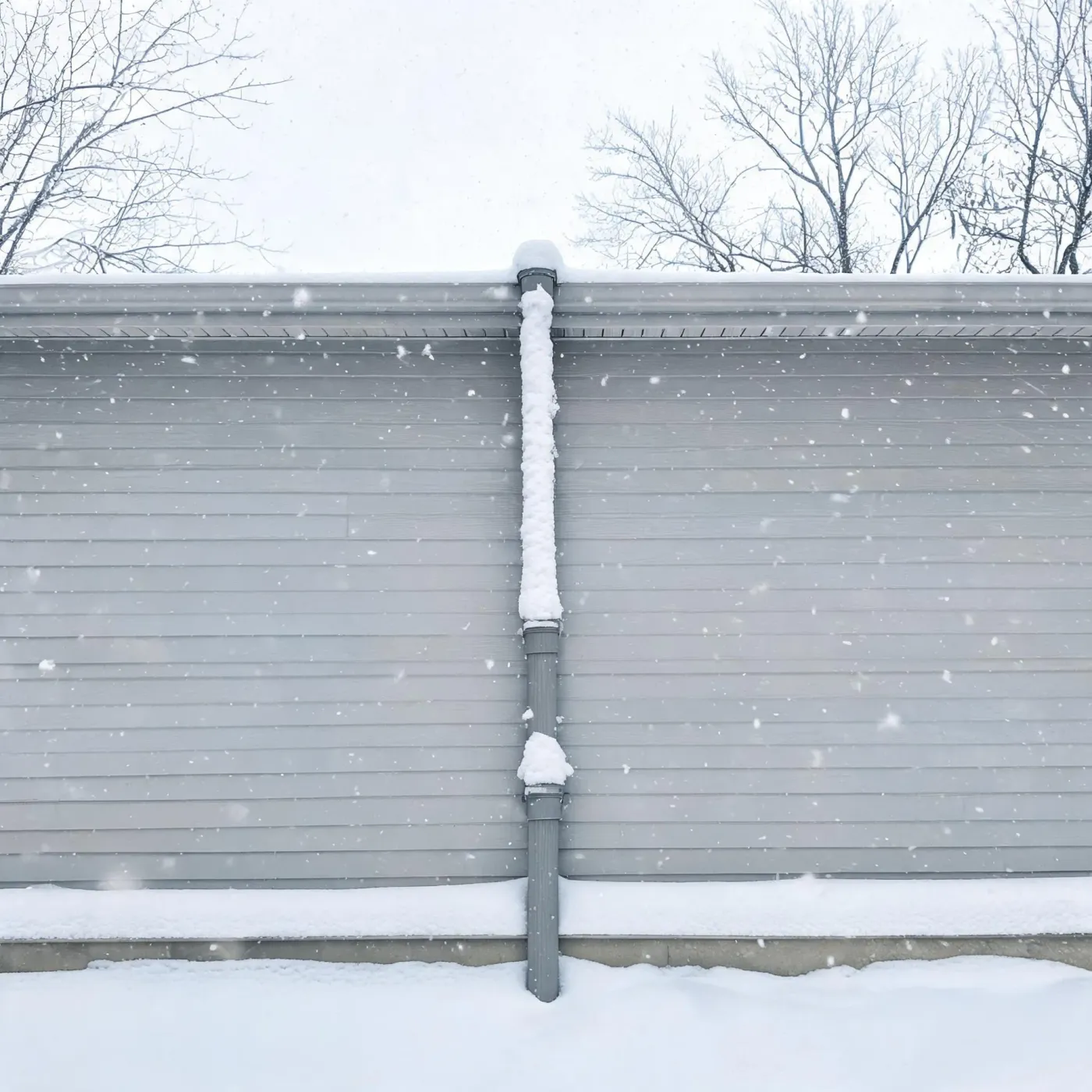
Winter nights average 23°F across Connecticut, according to NOAA climate data. That's below freezing for hours on end, night after night, from December through February. Your boiler is running through most of that, cycling on again before the house has a chance to lose the heat it just made. An old standard boiler loses a good share of each cycle up the flue, so it runs longer to make up for it, and you feel that on the gas bill. A high-efficiency model keeps more of that heat in the house on the coldest nights, when it matters most. Once you send the form, you're not the one who has to track down someone to size and install it. That part moves off your plate.
NOAA nClimDiv 1991-2020 county normals weighted by homes
A boiler that runs from November into April is doing most of its year's work in those five months, and every point of efficiency it lacks shows up on the January and February bills you've already looked at. Connecticut's electric rates are among the highest in the country, and plenty of homes here heat with electric backup or supplement with it, so a boiler that wastes less gas matters twice over. The math doesn't change from one Connecticut town to the next. What changes is the boiler in your basement, how old it is, what size your house needs, whether your venting can take PVC as it sits. Those are questions worth answering before you decide anything, not after. A contractor who's looked at your flue, your gas line and your radiators can tell you what a new boiler would actually save you, not what one saves in general. That's a different answer for every house, and yours is the one that matters.
Cold water returns from your radiators into the boiler.
The burner fires and heats water in the primary heat exchanger.
Hot water pumps out to radiators or baseboards to heat your home.
Exhaust passes through a second heat exchanger before venting outside.
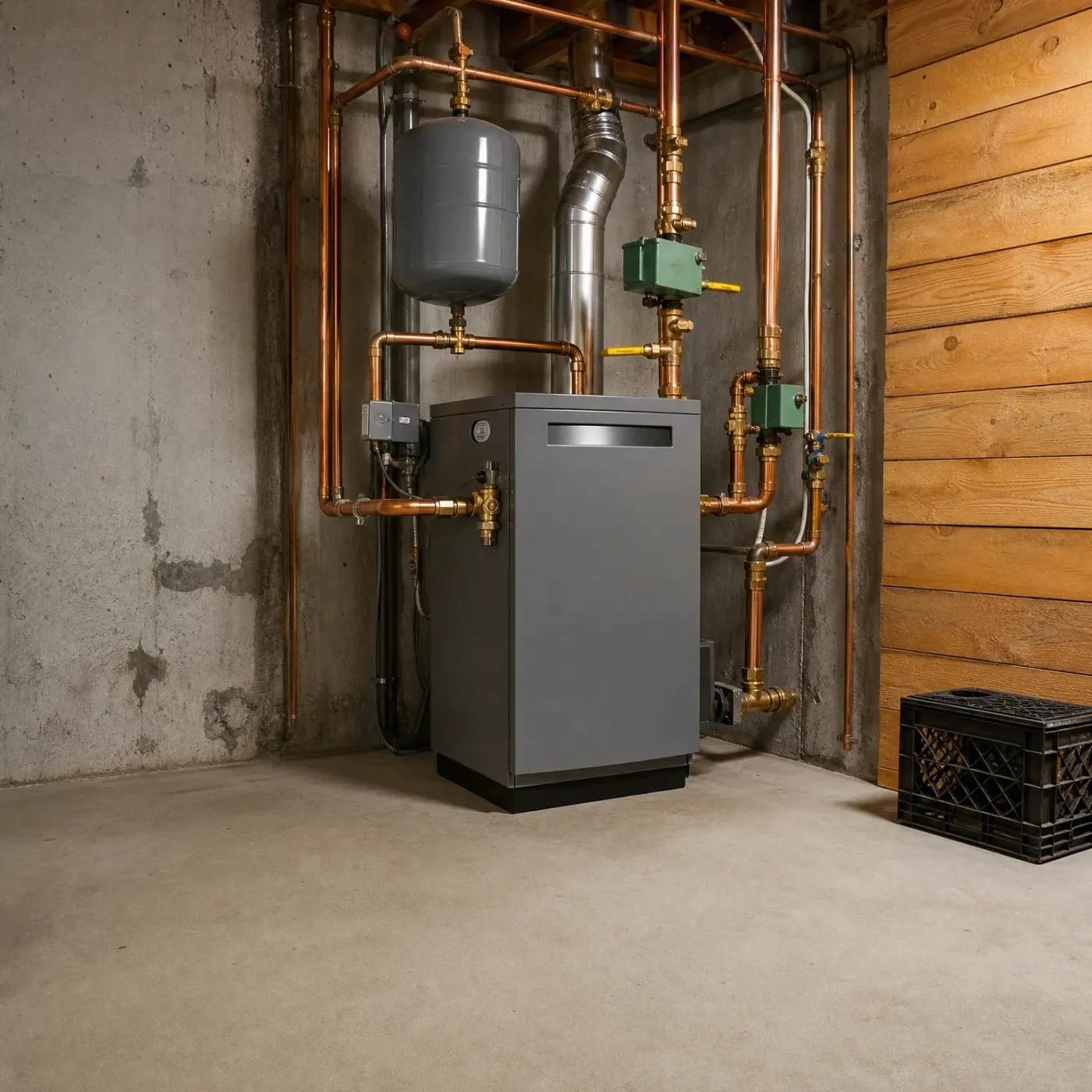
This is what a system built for a Connecticut winter looks like. The copper piping and zone valves route heat where it's needed, and the stainless flue tells you the exhaust is cool enough to vent through it. Nothing here is working harder than it has to.
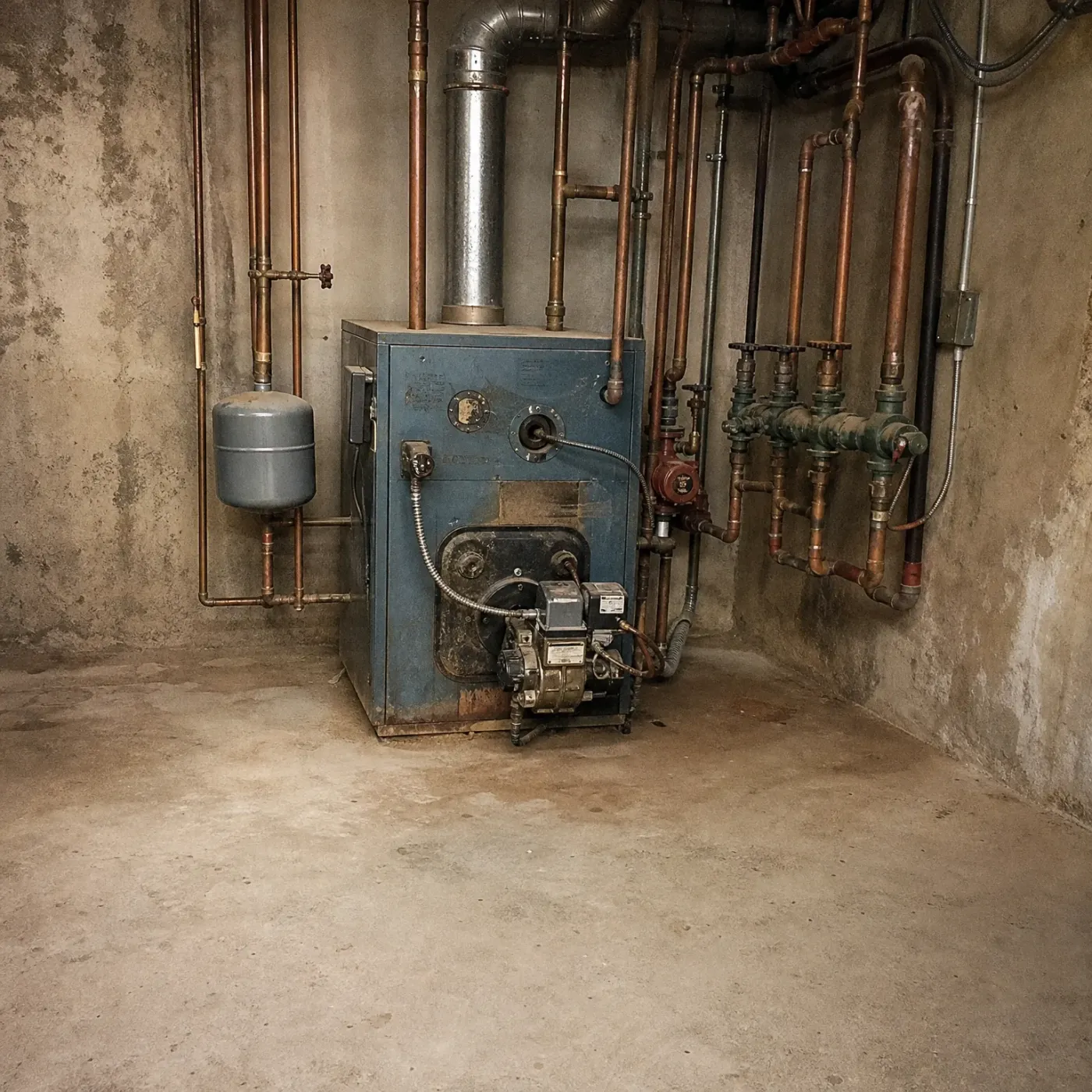
This old oil-fired unit is still running, but look at the galvanized flue overhead. That pipe carries heat straight out of the house every time the burner fires. The zone valves and circulators on the manifold are doing their job. The boiler behind them isn't.

A high-efficiency boiler earns its keep in a state where winter runs five months and gas gets burned the whole time. The upfront cost is real, and so is the PVC venting and condensate drain it needs that a standard boiler doesn't. But a Connecticut winter gives a 90-plus AFUE unit more months to make that back than almost anywhere else in the country.
Whether it makes sense for your house depends on what's in your basement right now, what your January bills look like, and what kind of venting and piping your home can support. That's not something to guess at from a search page. A licensed boiler contractor can look at your actual setup and tell you where you stand, and once you've sent the request, that part isn't on you anymore. Someone who knows Connecticut installations will reach out and take it from there.






One request ends the search for a boiler installer.
You're not committing to anything by asking.