CT Boiler Service
Profile view of a bearded man wearing a black baseball cap and a dark gray T-shirt against a plain light background.

What a boiler tune-up covers before a Connecticut winter

Step 1 of 3: Equipment

What does a boiler tune-up actually cover before winter?

Before the cold sets in, you want to know what you're actually paying for when you book a tune-up, not just that it's a good idea. A Connecticut winter runs long, and a boiler that quits in January is a worse problem than one checked in October. You want the specifics: what gets looked at, what gets cleaned, what gets tested, so you know the visit was worth it.

It covers a full check of the parts that let the boiler run safely and hold up through winter

A tune-up means a technician checks the burner and flame, tests the pressure and temperature controls, bleeds air from the system, checks the water level and the expansion tank, and looks over the flue and vent for blockage or corrosion. Each of those can cause a breakdown or a safety problem on its own, so a tune-up checks them one by one rather than guessing at the system as a whole. Connecticut winters run long, often into April, and a boiler that sat idle since spring can have a part sticking or a control drifting out of calibration without you knowing. Catching that in October means it gets fixed on a mild day instead of a cold one.

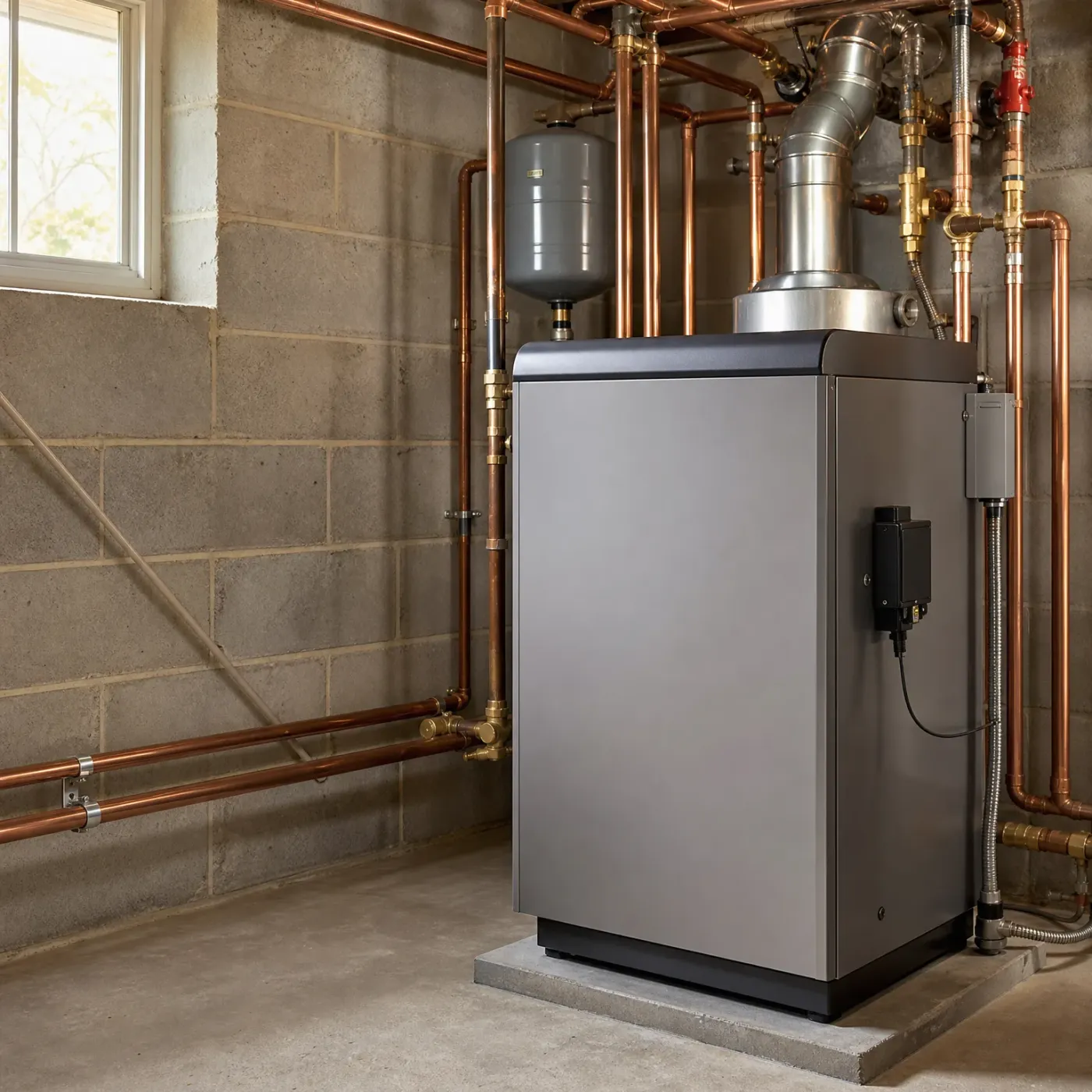
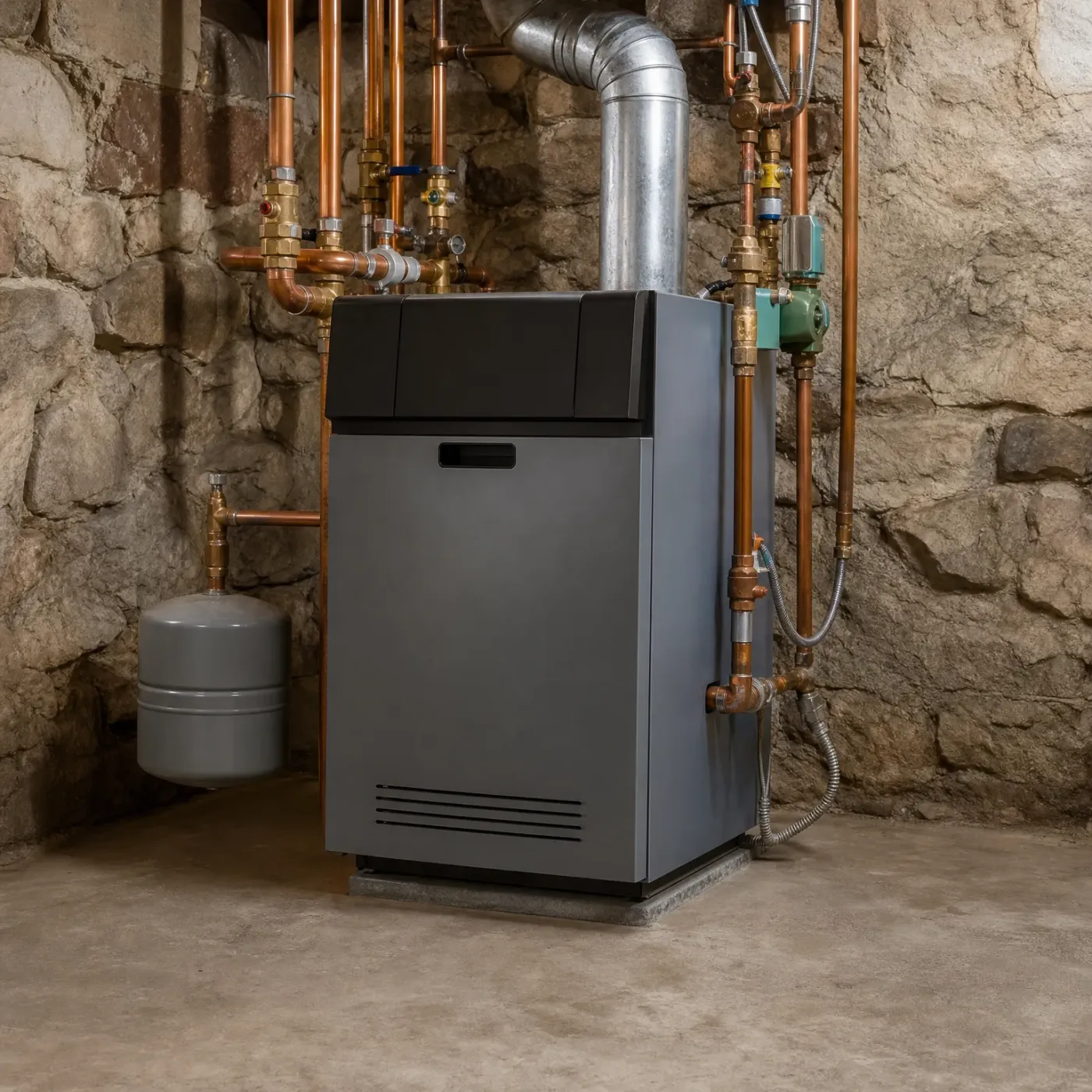
A gray residential boiler on a concrete pad in a basement with stone walls, connected to copper piping, brass valves, a circulator pump, an expansion tank, and a metal flue duct.

Tuned before winter

This is a boiler that's been bled, pressure-checked, and had its burner and flue inspected while the weather was still mild. The pump runs quiet, the pipes hold steady pressure, and nothing is left to guess about once it's running every day through a Connecticut winter.
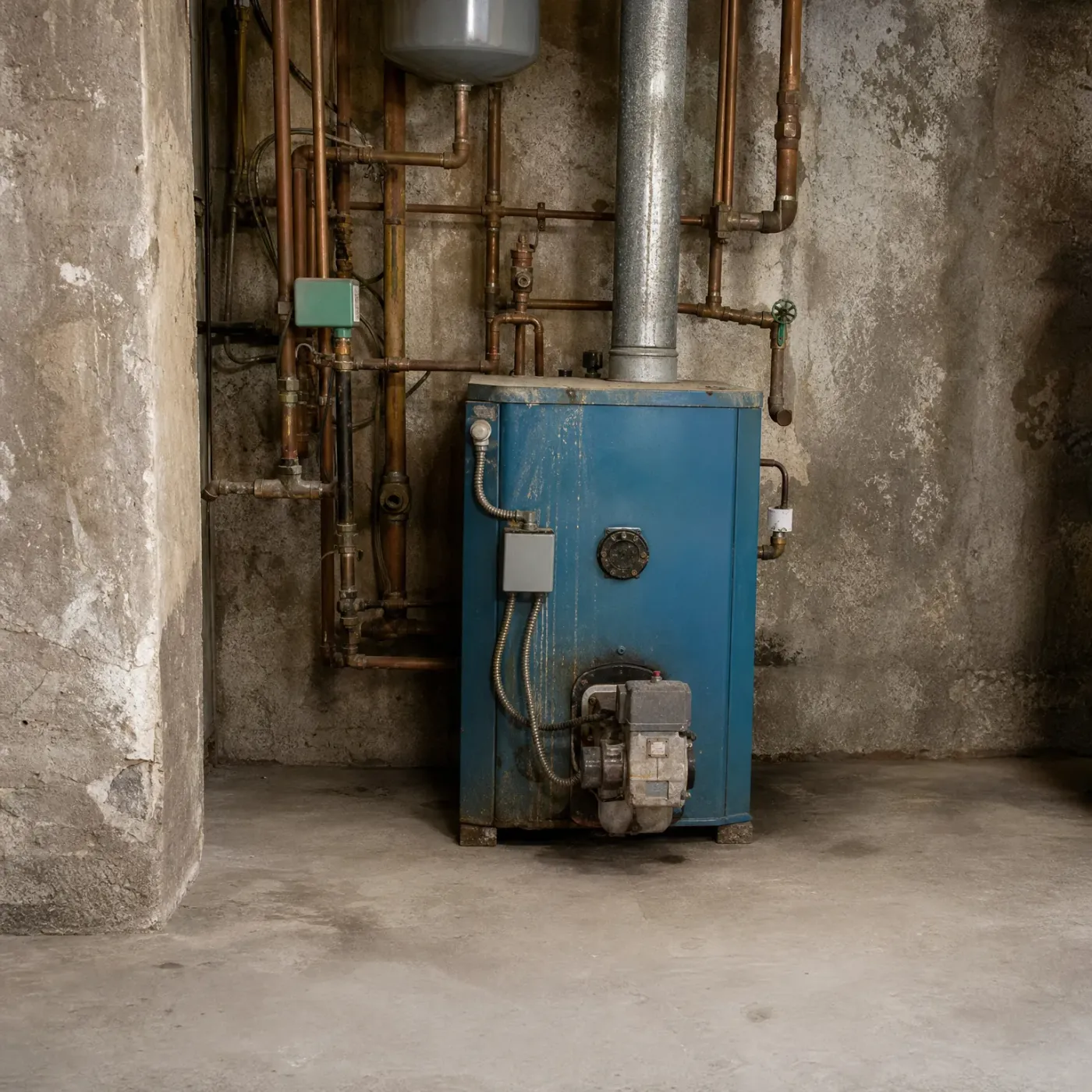

A blue cabinet boiler with a metal flue pipe and copper piping stands against a bare concrete wall in a basement with a concrete floor.

Left alone too long

This is what shows up after a season or two with no one looking at it. Soot builds on the burner, the flue pipe corrodes, and pressure drifts without anyone noticing. It still runs, until the night it doesn't, usually when it's needed most.

A smiling man in a gray long-sleeved shirt stands in a kitchen looking to the side, with open shelves of dishes, a white mug on the counter, a potted plant, and a view through a doorway into a living room.
A smiling bearded man in a green sweater sits at a white marble kitchen island with a mug, potted plant and bowl of fruit, in a bright white interior with open shelving and an arched doorway.
A smiling man with dark curly hair and a beard, wearing a dark green knit sweater, stands at a white marble kitchen counter with a dark blue mug, with open shelving, pendant lights and a houseplant behind him.
A smiling man in a green ribbed sweater stands behind a wooden table holding a ceramic mug of coffee in a kitchen with white subway tile, shelves of potted plants, and a bowl of fruit.

What gets checked by hand

A tune-up means someone opens the boiler up and looks at it. The burner gets cleaned, the flue gets checked for a proper draft, and the pressure and temperature relief valve gets tested so it won't seize up when you actually need it to work. The pump gets bled of air, and the system pressure gets brought back to where the manufacturer wants it. None of that shows up on a thermostat readout. It's the kind of thing you only know got done because someone did it, which is why a service record matters more than how the boiler sounds on a cold morning.

Why it matters before January

A boiler that's never been touched will usually still fire up and heat the house. The trouble shows up as a slow slide: pressure drifting low, a pilot or igniter that's marginal, a flue that's partly blocked. None of that fails all at once, and none of it is obvious from the thermostat. It tends to surface on the coldest night of the year, because that's when the boiler is working hardest and has the least room for error. Catching a weak part in November costs you an appointment. Catching it in January costs you heat, and maybe a frozen pipe while you wait.

A blue boiler on a raised concrete pad in a basement corner, with copper and steel pipes, a gauge cluster, an expansion tank, and a metal flue running up the bare concrete walls.
Before you get your boiler maintenance
A dark gray floor-standing boiler on a concrete pad in a basement, surrounded by copper piping, brass valves, a gray expansion tank, a circulator pump, and a metal flue pipe against concrete block walls.
After you get your boiler maintenance

What a skipped tune-up costs you in January

A boiler that's never been bled runs with air trapped in the system, so the pump works harder and your gas bill climbs before you ever notice a problem. In Connecticut that difference lands on an already expensive bill. Worse is what happens on the coldest night of the year, when a dirty burner or a stuck valve takes the whole system down and you're calling around for someone who can get out to a house with no heat. That search, explaining the same problem to three different companies, waiting on callbacks, is the part a tune-up in October lets you skip entirely.

What you'd actually notice at home

A boiler that's been looked at before winter sounds different. No banging in the pipes when it fires up, no gurgling from trapped air, no short-cycling that has it kicking on and off every few minutes. The rooms farthest from the boiler heat up at the same rate as the rest of the house instead of lagging behind. None of that is dramatic, it's just the difference between a system running the way it was built to and one that's been quietly losing ground since last spring. You notice it most on the first real cold snap, when the one next door is struggling and yours isn't.

A smiling man with dark curly hair in a navy t-shirt sits on a gray couch indoors, with a large-leafed plant and a window in the background.
A bearded man in a plaid flannel shirt stands in a kitchen looking out a window toward snow-covered shrubs, with a steaming mug on the windowsill and potted plants on a shelf behind him.
A gray floor-standing boiler on a concrete pad in a basement with concrete block walls, connected to copper piping, a flue vent, and an expansion tank.

Let someone else find the pro

Answer a few questions instead of calling shop after shop.

One request and the search for a pro is handled.

Skip the calls

There's no charge for the request.

Why does one room never get warm?

You've probably got a radiator or two that stays lukewarm while the rest of the house heats fine, or a boiler that clanks and gurgles when it fires up. Maybe the pilot light looks more orange than blue, or there's a faint burning smell the first time it kicks on for the season. Some rooms take twice as long to warm up as they used to. None of this means the boiler is about to fail, but it does mean it's working harder than it should to do the same job, and in a Connecticut winter that shows up on your gas bill before it shows up as a real breakdown.

A gray boiler unit on a concrete pad in a basement corner, connected to copper piping, circulator pumps, and a ceiling-mounted expansion tank against bare concrete walls.

Running the way it should

This is what a boiler looks like after someone's gone over it before the cold hits. The pipes and fittings behind it are dry, the pump isn't straining, and the gauge sits where it's supposed to. Nothing here is a surprise waiting to happen in February.

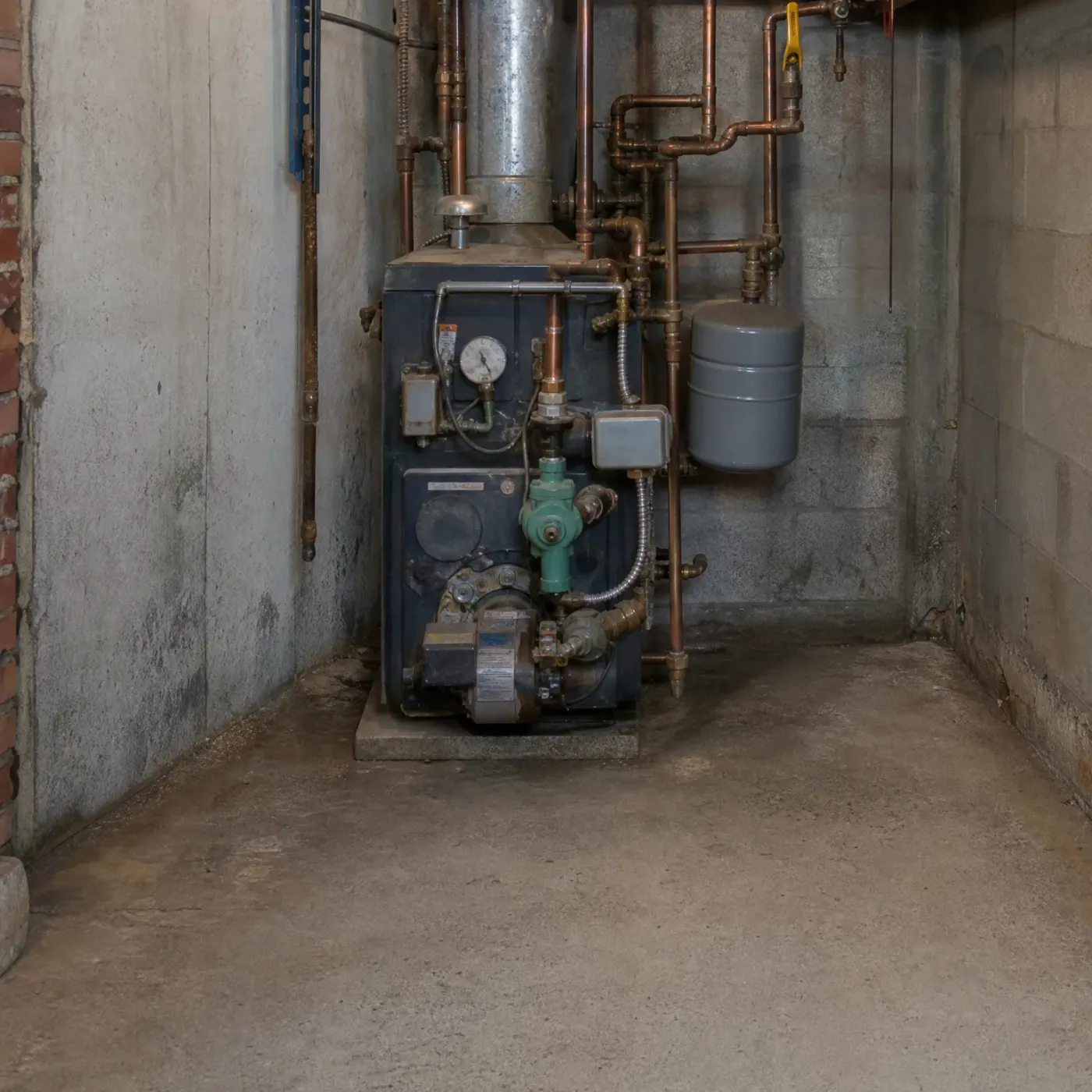
A blue oil-fired boiler with a pressure gauge, burner unit and metal flue sits on a concrete pad in a basement corner, surrounded by copper and black pipes against bare concrete walls.

Running on borrowed time

This boiler is still firing, but the pressure gauge is worth a second look and the burner hasn't been cleaned in a while. A unit like this can run for months before anything fails, right up until the night it doesn't, and that's usually the coldest one.

A closed laptop and a cream mug of coffee on a coaster sit on a dark wooden table, with a potted plant at left and a kitchen counter, tiled backsplash and shelf of ceramics in the background.

What the technician actually does, in order

A tune-up follows a sequence, not a checklist done at random. The system gets shut down and bled first, so trapped air comes out of the radiators and the water can circulate the way it was designed to. Then the burner assembly comes out for cleaning, because soot buildup on the burner is what makes a boiler run longer than it needs to for the same heat. After that comes the flue inspection, checking that combustion gases are actually leaving the house instead of backing up. The pressure relief valve gets tested last, by hand, since that's the part that keeps the system from building dangerous pressure if something downstream sticks.

Finding someone who does all of this, in this order, rather than a quick look and a sticker on the side of the unit, usually means calling a few places and asking the right questions before you know who's worth hiring. Once you send the form, that part is done. You're matched with a Connecticut contractor who already does the job this way, and you're not the one vetting technicians over the phone in November.

A living room corner with a beige upholstered armchair holding navy and striped cushions, a small round wooden side table with a carved bowl and a potted green plant, a framed landscape picture on a pale wall, built-in shelving, and a curtained window.
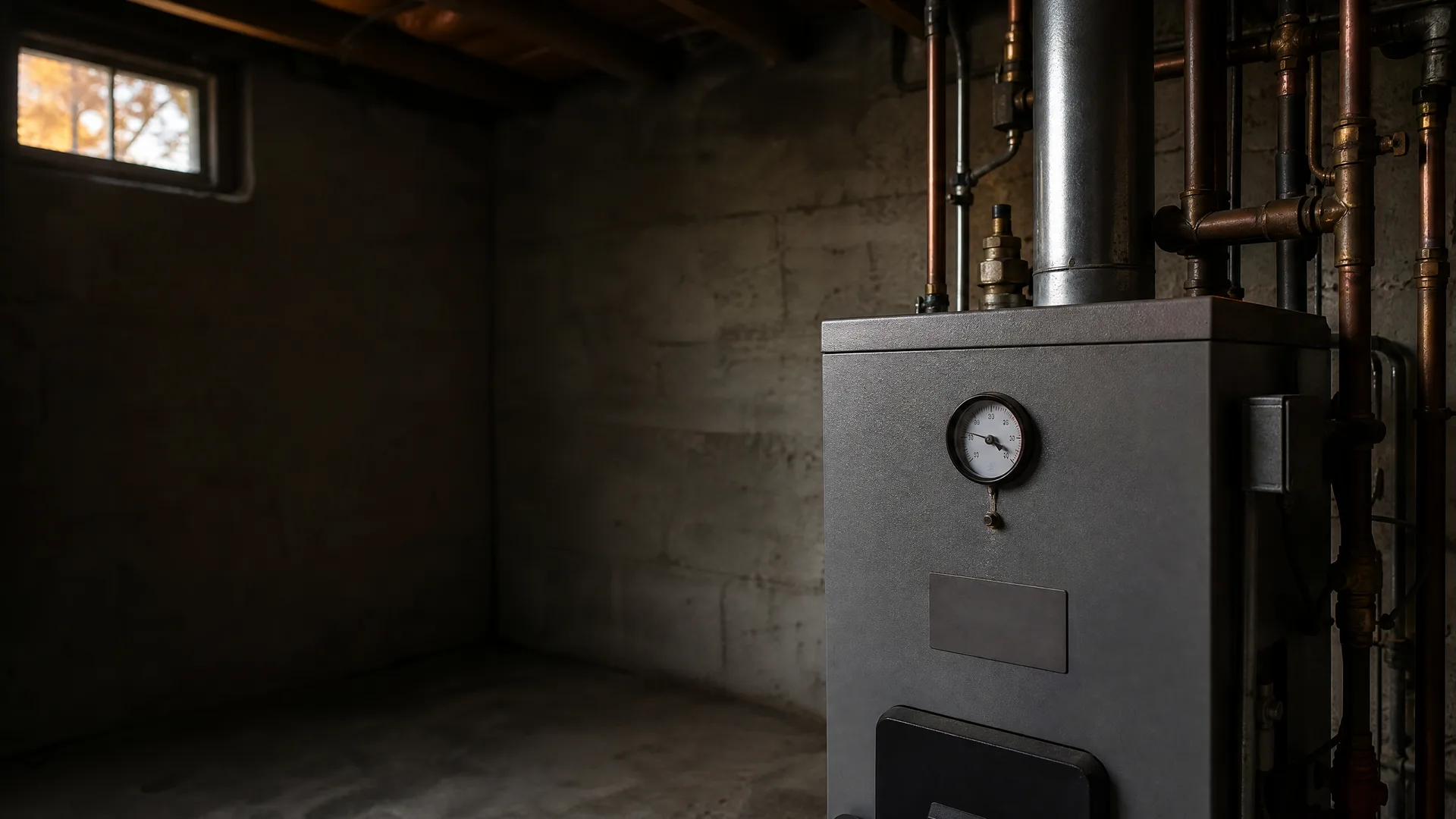
A gray boiler with a round pressure gauge and copper piping stands in a dim concrete basement lit by a small window showing yellow foliage.

The basement is cool enough by late October that you notice it on the stairs. You crouch by the boiler to check it before the first real cold snap, the way you do every year. The round gauge on the front sits low, the needle resting under where it usually holds. Nothing's hissing, nothing smells off. The burner is quiet. You tap the glass once out of habit, like it might move. It doesn't. You straighten up, make a mental note of the number, and head back upstairs to find the number for someone who can come look at it before you actually need the heat on.

Book it now or wait for the cold

Tune-up now

  • You pick the week, usually a mild weekend before the first real cold snap in October or November.
  • Someone finds the slipping pump or the weak igniter while it's still an easy fix, not an emergency call.
  • You get one bill for the visit instead of a diagnostic fee stacked on top of whatever part failed.
  • The technician bleeds the system and checks pressure while the boiler is already cold and sitting idle.
  • You know the flue and burner were looked at before the thermostat gets set and left alone for the season.

Wait for a breakdown

  • You're calling around in January trying to find a contractor who isn't already booked solid.
  • You're explaining the same problem to three different companies before one can send someone out.
  • A failed part in deep winter often means a day or more without heat while you wait for a slot.
  • Whatever broke took longer to fail and do more damage because nobody caught it in October.
  • You're comparing quotes under pressure instead of on your own schedule, with the house already cold.
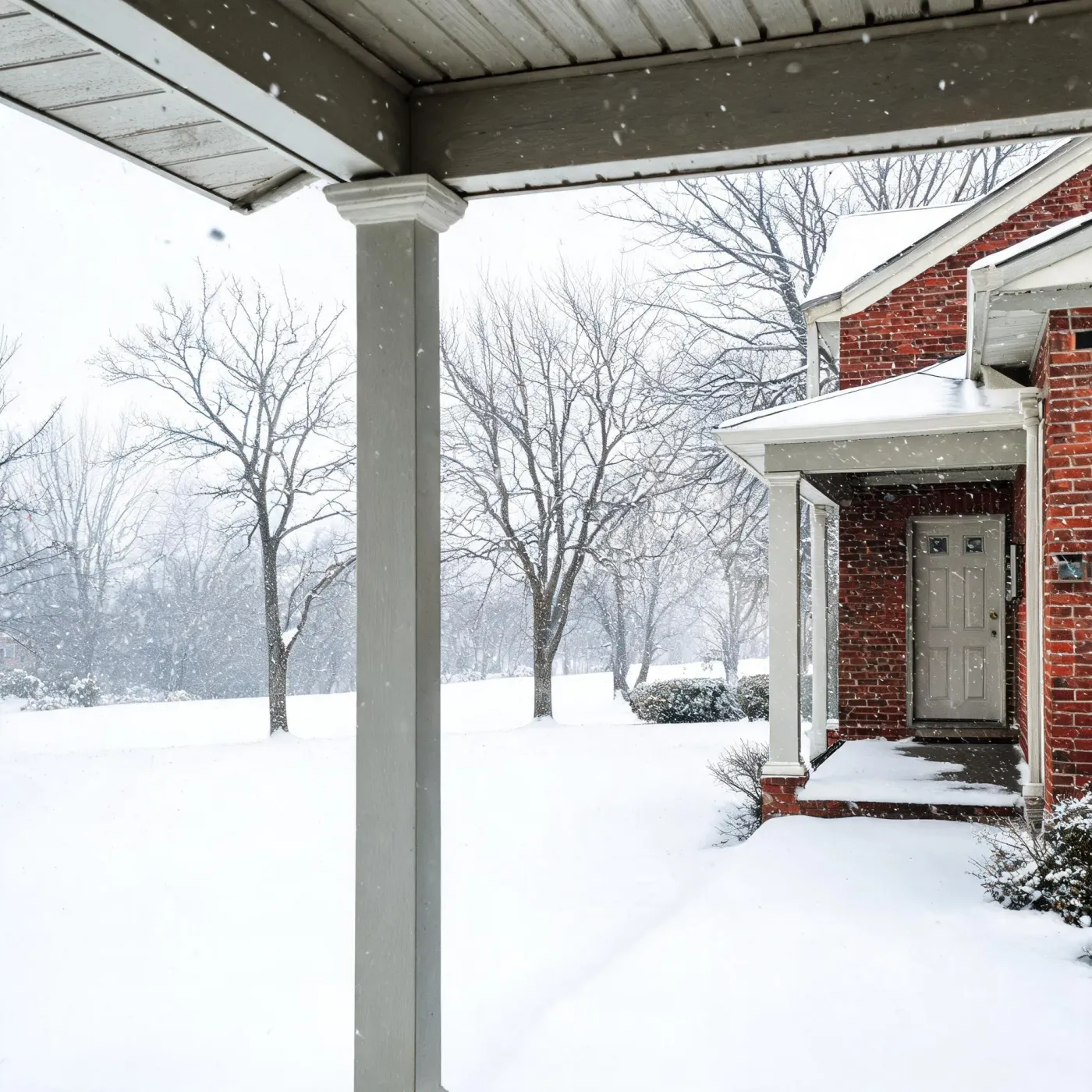
View from under a covered porch with a white column toward a red brick house entrance with a gray door, surrounded by deep snow, bare trees, and falling snowflakes.

Winter nights average 23°F statewide, according to NOAA climate data. That's the temperature your boiler is working against most nights from December through February, not just on the coldest week. A burner that's slow to light or a flue with a weak draft doesn't show it much in October, but at 23°F it has to run longer to hold the house at temperature, and a radiator that was lukewarm in fall turns cold in a room you use every day. You'll notice it as the boiler cycling more, or that one upstairs room never quite catching up no matter how long the heat runs.

NOAA nClimDiv 1991-2020 county normals weighted by homes

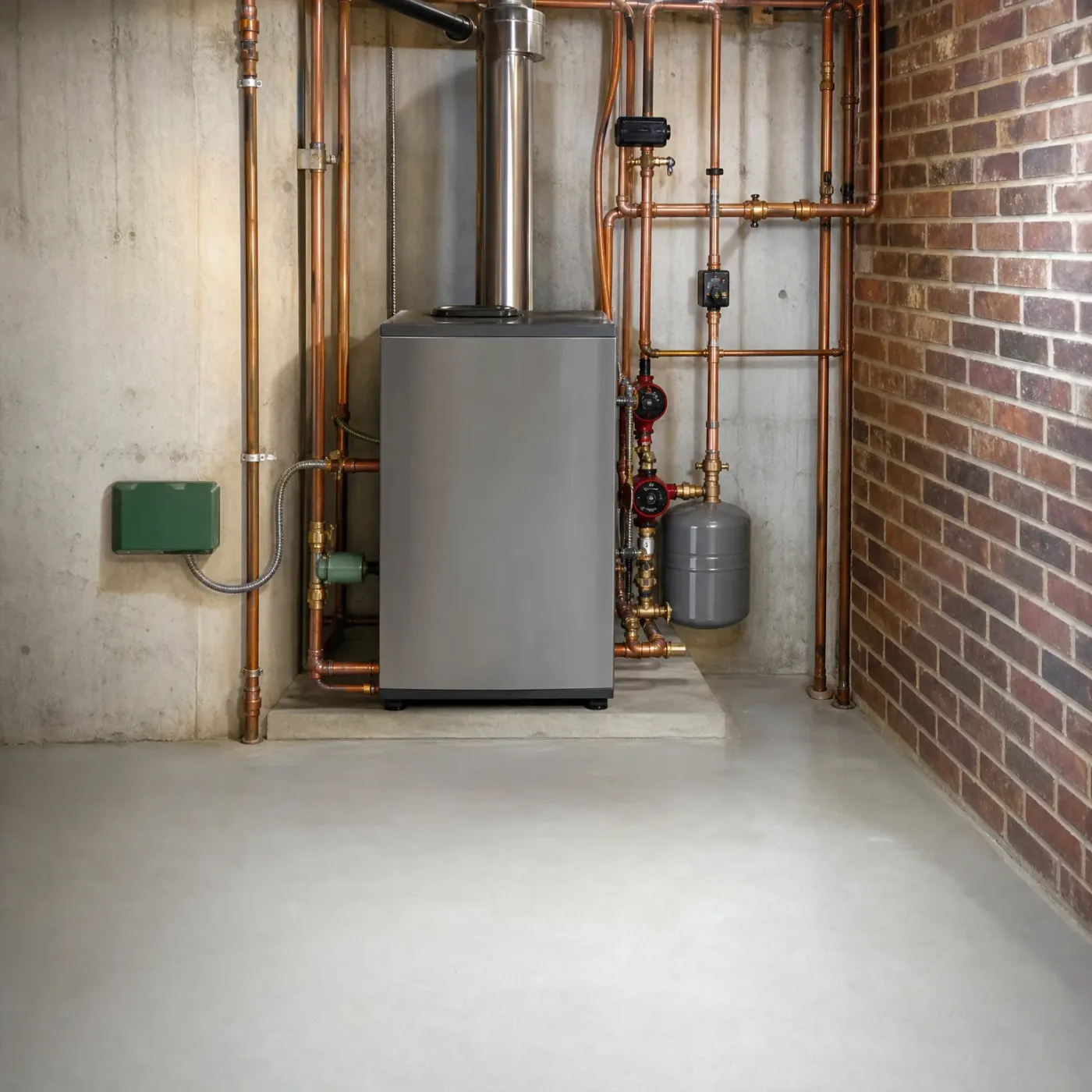
A gray boiler on a concrete pad in a basement, connected to copper piping, valves, pumps and a gray expansion tank, with a concrete wall on the left and a brick wall on the right.
A boiler like this has had its pump and pipes checked before the cold hit, so nothing in that mechanical room is under more strain than it should be.
A dark cast-iron boiler with copper piping, pressure gauge, and a gray expansion tank sits on a concrete pad in a basement corner with concrete block and brick walls.
An older oil-fired boiler like this gets harder to read over time, and a weak flue draft or a slow burner can hide behind a normal-looking gauge.

Winter nights average 23°F statewide

23°F is the average, which means plenty of nights drop colder than that. Your boiler has to hit that mark and hold it for hours, not just reach temperature once. A burner that's slow to fire or a pump that's straining shows up fastest on nights like these.

NOAA nClimDiv 1991-2020 county normals weighted by homes

A boiler tune-up before winter comes down to a few things checked by hand: trapped air bled out, pressure and burner tested, the flue confirmed to draft the way it should. None of that is complicated, but it's the difference between a system that holds steady through a Connecticut winter and one that quits on a night in the 20s. You don't need to know how to do any of it. You need someone who already does, checking it before the cold makes the stakes higher. Finding that person is usually the part that eats your evening: looking up contractors, calling a few, explaining the same thing about your boiler each time, then weighing quotes that aren't quite comparable. That part is what this page takes off your plate. Once you send the form, you're not the one tracking down who's available and who's reliable. You know what a tune-up covers now, and you know what it costs you to skip it. What's left is getting it scheduled before the first real cold snap, not figuring out who to call.

A dark wood cabinet with a paneled door and a ceramic pot of green foliage on top stands in a beige-walled room with white baseboard, a window at left, hardwood floor, and a patterned area rug.
A dark wood glass-front cabinet holding folded towels, woven baskets and a ceramic vase stands in a bathroom corner beside a window, with a potted fern and stacked towels on top and a freestanding tub partly visible at left.
A woven basket holding a green cushion and a cream fringed knit throw sits on a wood floor in a room corner beside a window and a dark wooden cabinet.
Corner of a room with a dark wood cabinet topped by a round vase, a linen curtain at a window, white baseboard, oak plank flooring with sunlight patches, and a woven jute rug in the foreground.
A dark wood sideboard against a pale wall holds a shallow stone bowl and a round ceramic vase with leafy branches, with sunlight from a curtained window falling across the wall, wood floor and woven rug.

One request and it's handed off

Describe your boiler job once, to one pro.

Answer a few questions

You only hire the pro if you want to.