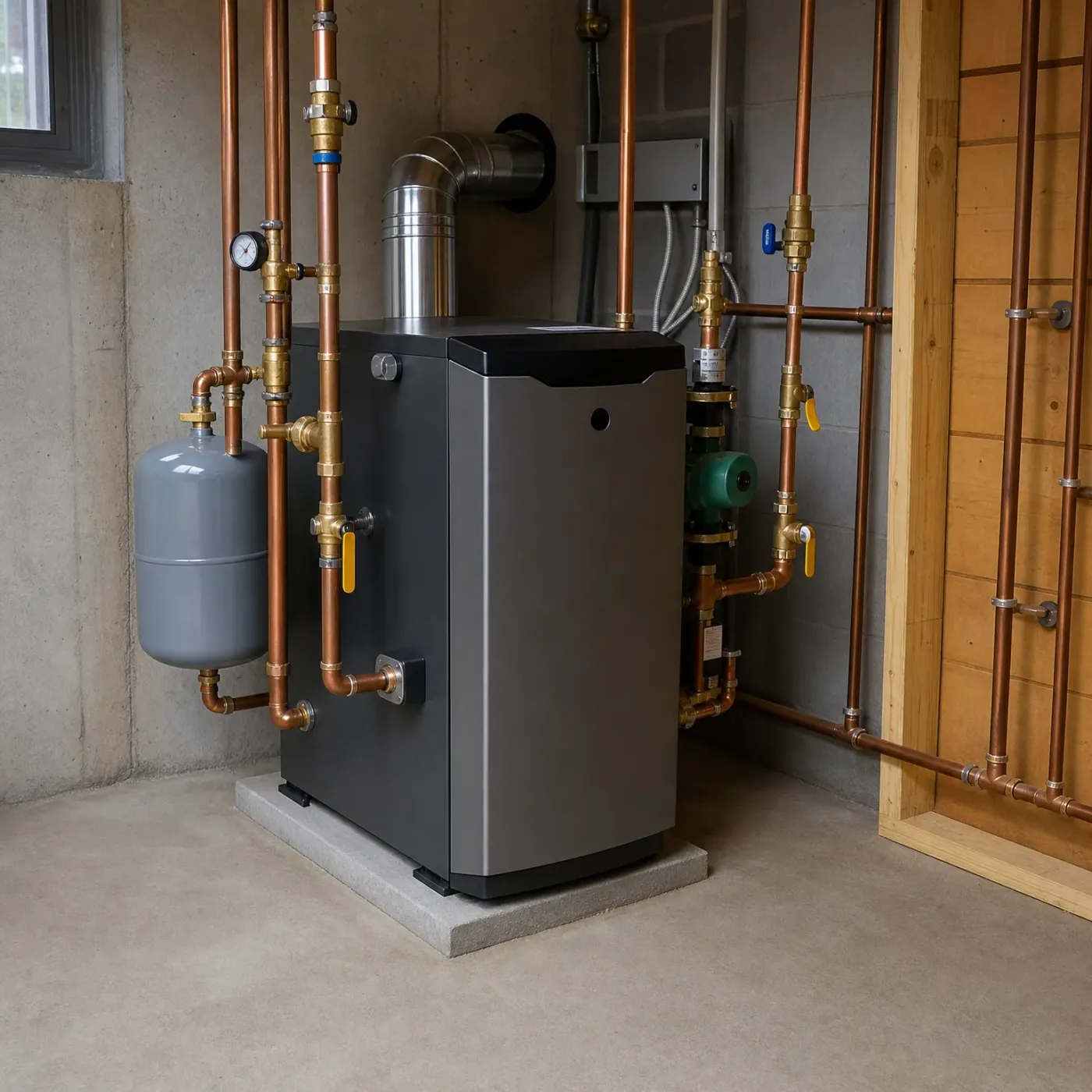
Sized right
A boiler matched to your home's heat loss holds steady through a cold snap without straining. Short cycling stays rare, the water temperature stays where it should, and a Connecticut winter stops being a test of the equipment.

You want a straight answer before a contractor shows up, not a vague range. Sizing a boiler wrong in either direction costs you: too small and it runs flat out on the coldest nights without keeping up, too big and it short cycles, wearing out parts early and wasting the gas or oil you're paying for. With power and fuel costs what they are in Connecticut, getting this number right matters more than picking it out of a catalog.
There's no fixed number of BTUs per square foot that works for every Connecticut house. A contractor sizes your boiler with a heat loss calculation, which looks at your home's insulation, window count and type, ceiling height, and how exposed the house is to wind and cold. Two houses the same size a few towns apart can need different boiler outputs because one has more windows facing north or less insulation in the attic. Connecticut's winters push this calculation harder than milder climates would, so a boiler sized by square footage alone often ends up too big or too small. The contractor doing your installation should walk through this with you room by room before recommending a model.
A boiler matched to your home's heat loss holds steady through a cold snap without straining. Short cycling stays rare, the water temperature stays where it should, and a Connecticut winter stops being a test of the equipment.
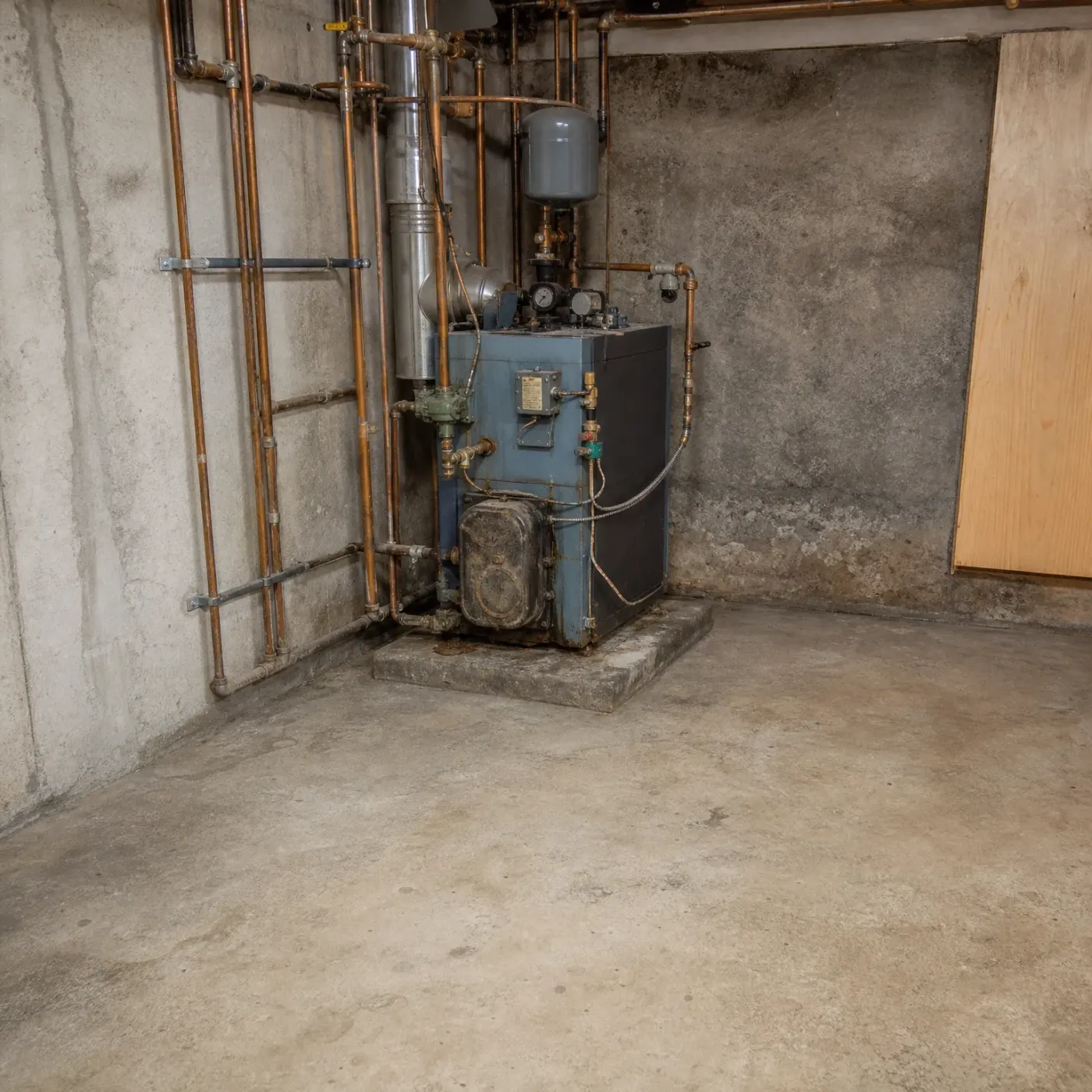
An oversized or undersized boiler shows up fastest in January. It either shuts off and on all day or can't keep the far rooms warm when it matters. Either way, the load it wasn't built for wears on it year after year.




Two houses the same size can need different boilers. A 1960s house with no wall insulation loses heat faster than one updated with new windows and insulation, so it needs more boiler output per square foot to hold the same temperature on a cold night. Ceiling height, how many walls face outside, and how big the windows are all change the number. That's why a contractor runs a heat loss calculation room by room instead of using a square footage chart. Two neighbors with identical-looking houses can end up with boilers rated several thousand BTUs apart, and both be sized correctly.
A boiler's rating is measured in BTUs per hour, and it tells you how much heat it can put out, not how big the unit is. Manufacturers list an input rating and an output rating, and the output number is the one that matters for sizing since it accounts for the boiler's efficiency. A contractor sizes to your home's actual heat loss on the coldest day of the year, not the average day. A boiler rated higher than that number doesn't heat your home faster. It just cycles on and off more than it should.
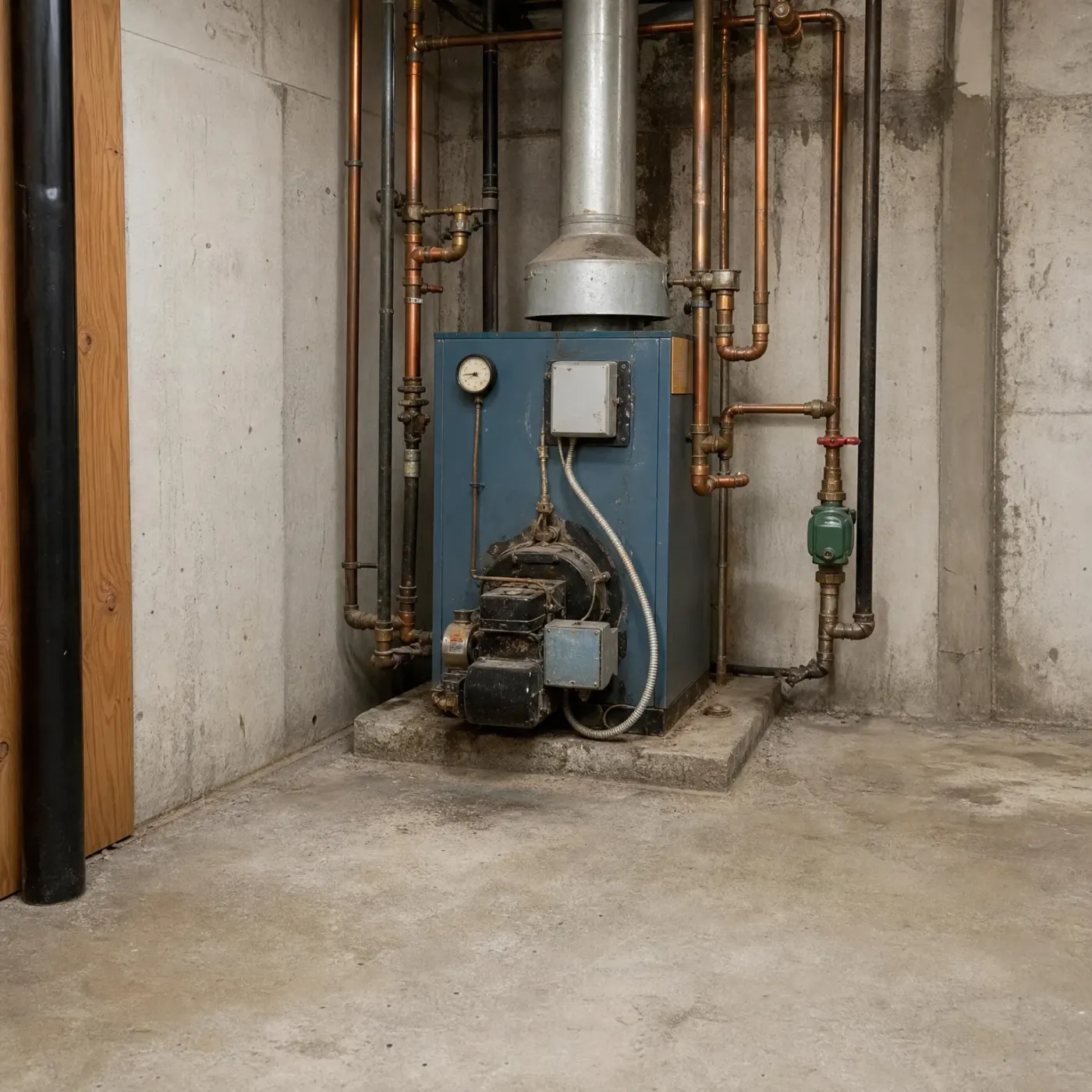
On a night near zero, it runs without stopping and the far rooms still feel cold. Pipes near outside walls are the first to lose heat.
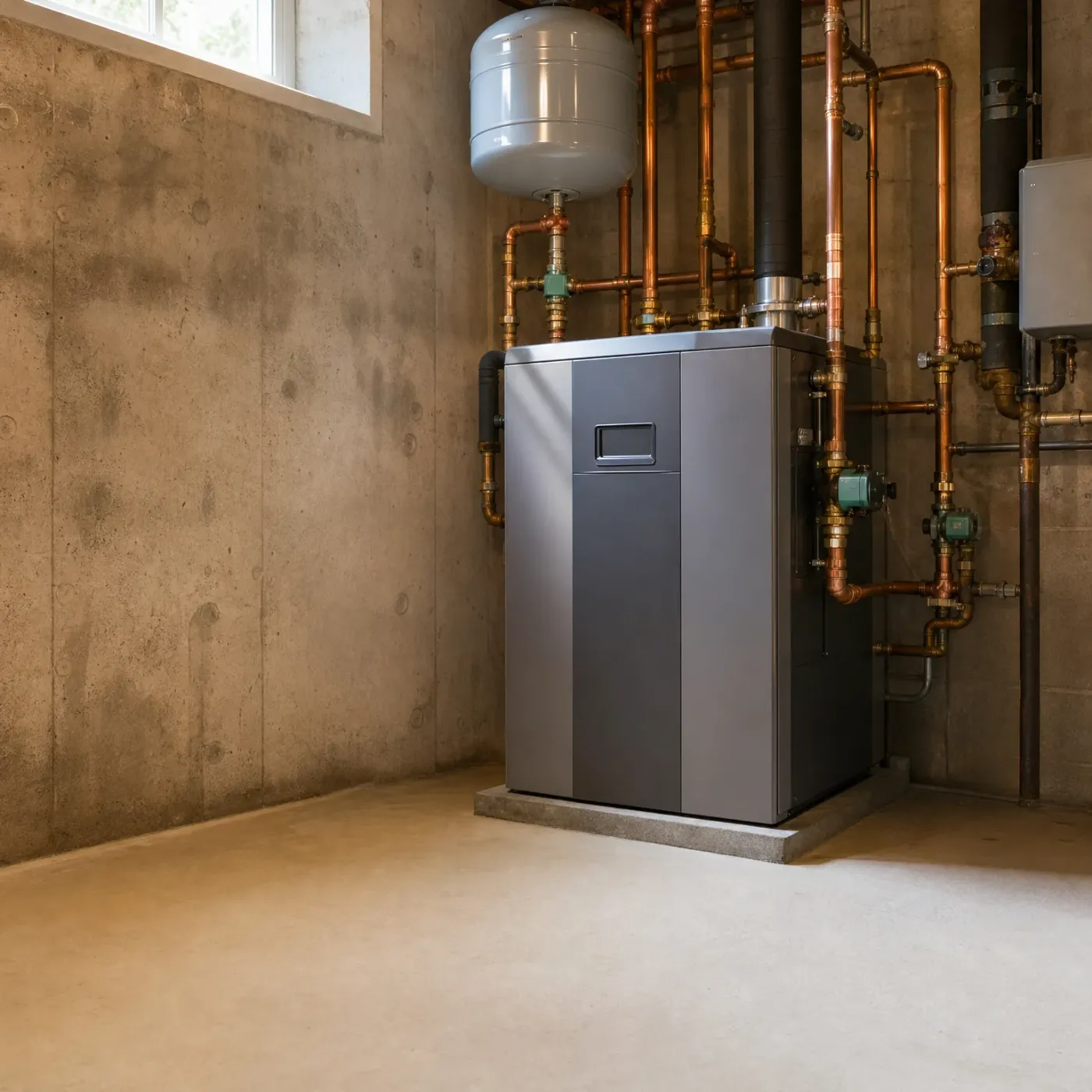
Short bursts of heat followed by long quiet stretches. With power costs what they are here, that cycling shows up on the bill before you've placed the next one.


Your request stays with one local pro.
Say what's going on with your boiler, and a pro who works on them reaches out.
Sending the form costs nothing.

A proper sizing job starts with a Manual J heat loss calculation, room by room. The contractor measures the walls, counts the windows, checks the insulation, and notes how the house is oriented, because a north-facing wall loses heat differently than one that sits in afternoon sun. That number, in BTUs per hour, is what the boiler has to match. It has nothing to do with the square footage figure on your tax card.
Radiators and baseboard loops factor in too. A boiler feeding cast iron radiators moves heat differently than one feeding fin-tube baseboard, and the contractor sizes the unit to what's already running through your walls and floors, not to a generic setup. This is the kind of work that goes wrong when someone eyeballs it from a truck. A local contractor who does this calculation for Connecticut houses every winter knows which old systems tend to be undersized from the start and which additions never got accounted for. Getting matched with one means someone looks at your actual house, not a spreadsheet guess, and that's the person who should be doing your installation.

Some contractors still price a boiler off square footage alone, or just match whatever size is already there. It's faster to quote that way, and most of the time nothing obviously goes wrong. But a home with an addition, old single-pane windows, or a finished basement won't fit that guess, and the boiler installed ends up wrong for the house it's heating.

A contractor based near you and working on boilers through a Connecticut winter has seen what fails in houses like yours, whether that's a cast iron boiler losing capacity or zones that never balanced right. When you're matched with one, it's a single local contractor reaching out, not a handful of companies competing for the job.
23°F is the average, not the coldest it gets. Your boiler has to be sized for the nights well below that, not the mild ones, or it falls behind right when you need it most.
NOAA nClimDiv 1991-2020 county normals weighted by homes
The right size comes from a heat loss calculation on your house, not a square footage chart. Get that number right and the boiler holds a steady temperature through January without short cycling or falling behind on the coldest nights. A local contractor who installs and services boilers in Connecticut every winter has seen which houses run small and which run big, and knows the questions to ask about your walls, windows and layout before quoting a size. When you request a match through this page, you're connected with one contractor suited to your home, not a handful competing for your callback. That means a single conversation with someone who sizes boilers for houses like yours all season, rather than a stack of quotes you have to sort through yourself.

Your request goes to one pro, not a list of companies.
You're not committing to anything by asking.