
What your boiler pressure should be in Connecticut

A local pro who services boilers gets in touch about the tune-up.

Request a pro

What should my boiler pressure be in Connecticut?

Your pressure gauge sits right there on the boiler, and the needle rarely explains itself. Most homeowners only check it when something seems off, a cold radiator upstairs, a hiss from the relief valve, a boiler that won't fire. Knowing the normal range before something goes wrong means you can tell at a glance whether the system needs water or needs a contractor.

Most residential boilers should read between 12 and 15 psi when cold

A cold boiler sitting at 12 to 15 psi has enough water in the system to reach every radiator without air pockets forming at the top of the house. As the water heats, pressure climbs, often up to 20 or 25 psi while the system runs, then drops back down once it cools. If the gauge reads below 12 psi cold, the system is low on water and needs more added through the feed valve. If it sits above 30 psi, the relief valve may open on its own to release water. A reading that keeps creeping up or won't hold steady points to a bigger issue, often a failing expansion tank or a feed valve stuck open, and that's worth having a contractor look at before a Connecticut winter puts real demand on the system.

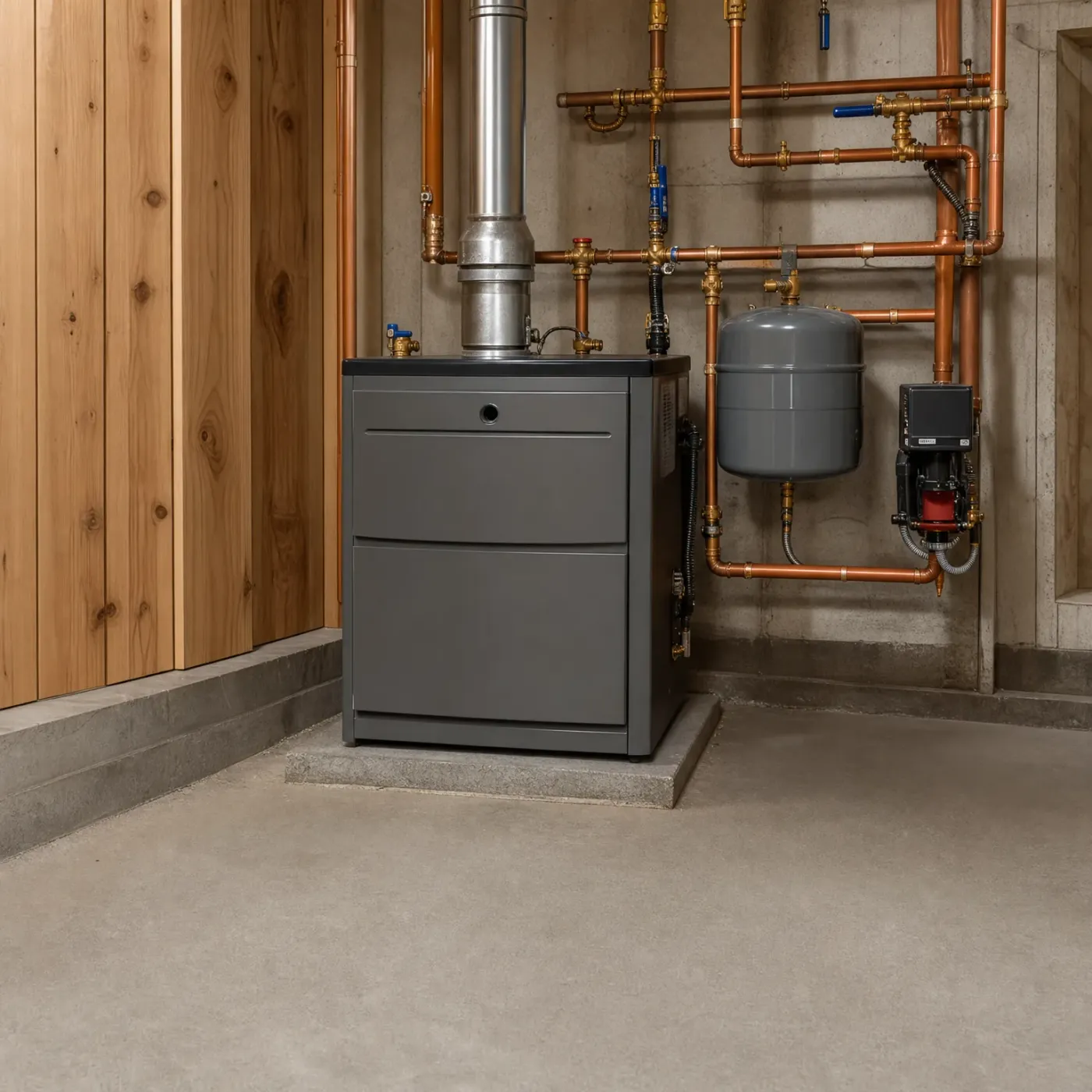
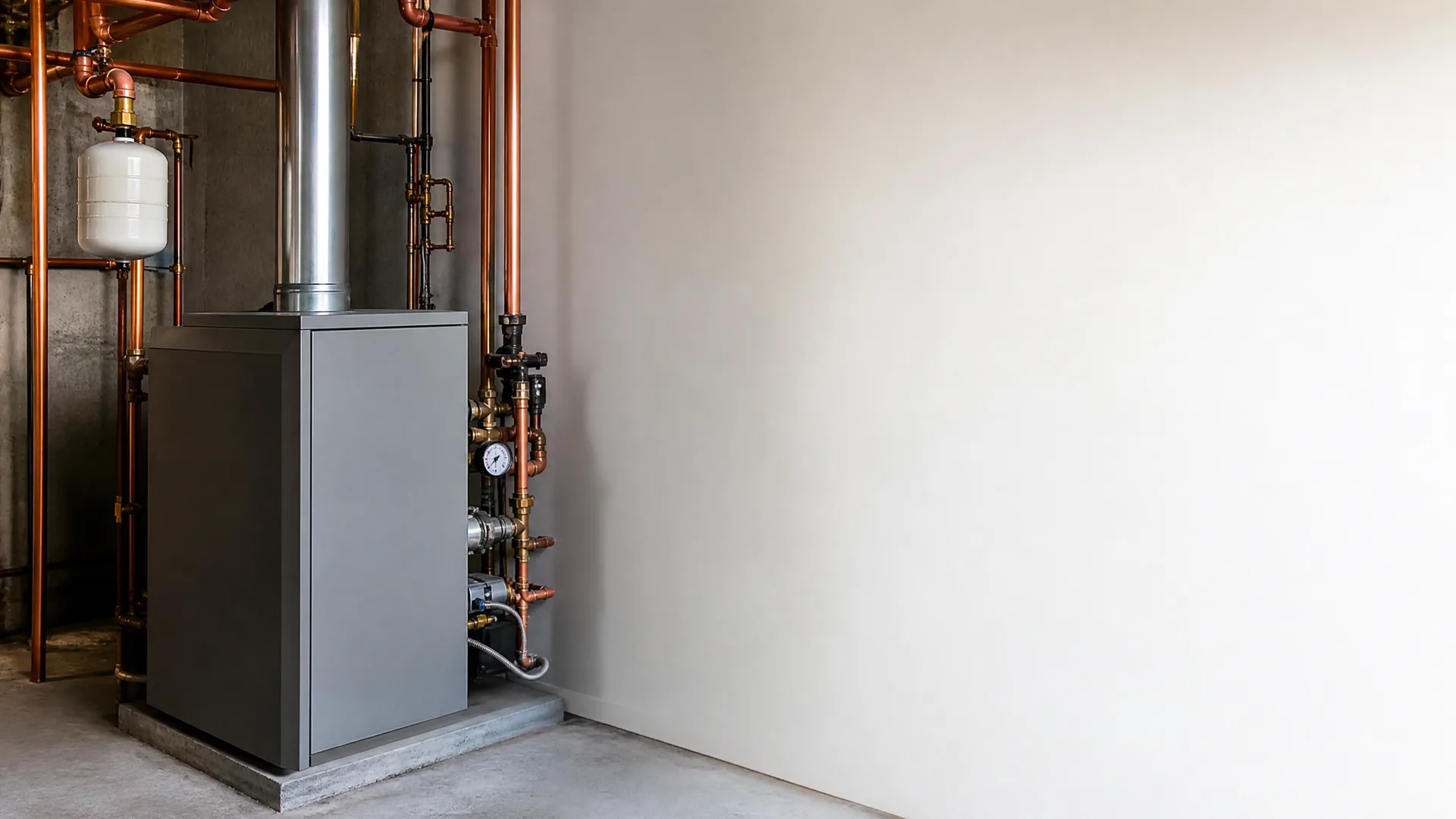
A grey floor-standing boiler with a metal flue and copper pipework, valves and a pressure gauge stands in the corner of a room with plain light walls and a concrete floor.

Why the needle moves on its own

A boiler's pressure shifts with heat. Cold, the gauge should sit low. Once the system fires and the water in the loop warms up, it expands and the needle climbs. That rise is normal and expected. What matters is where the needle sits before the burner ever starts. Check it first thing on a cold morning before the heat has run, not right after a cycle, or you're reading the wrong number.

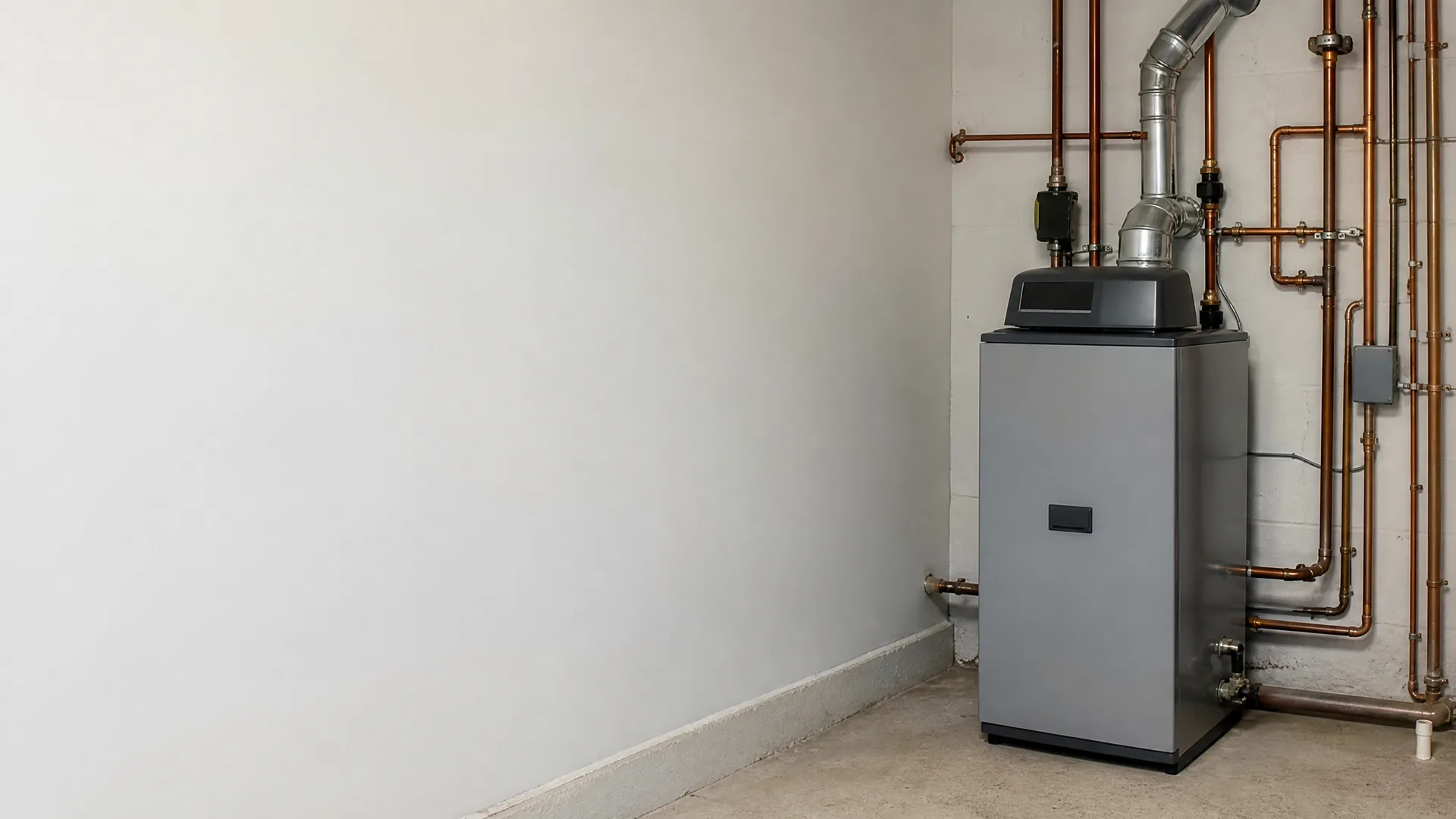
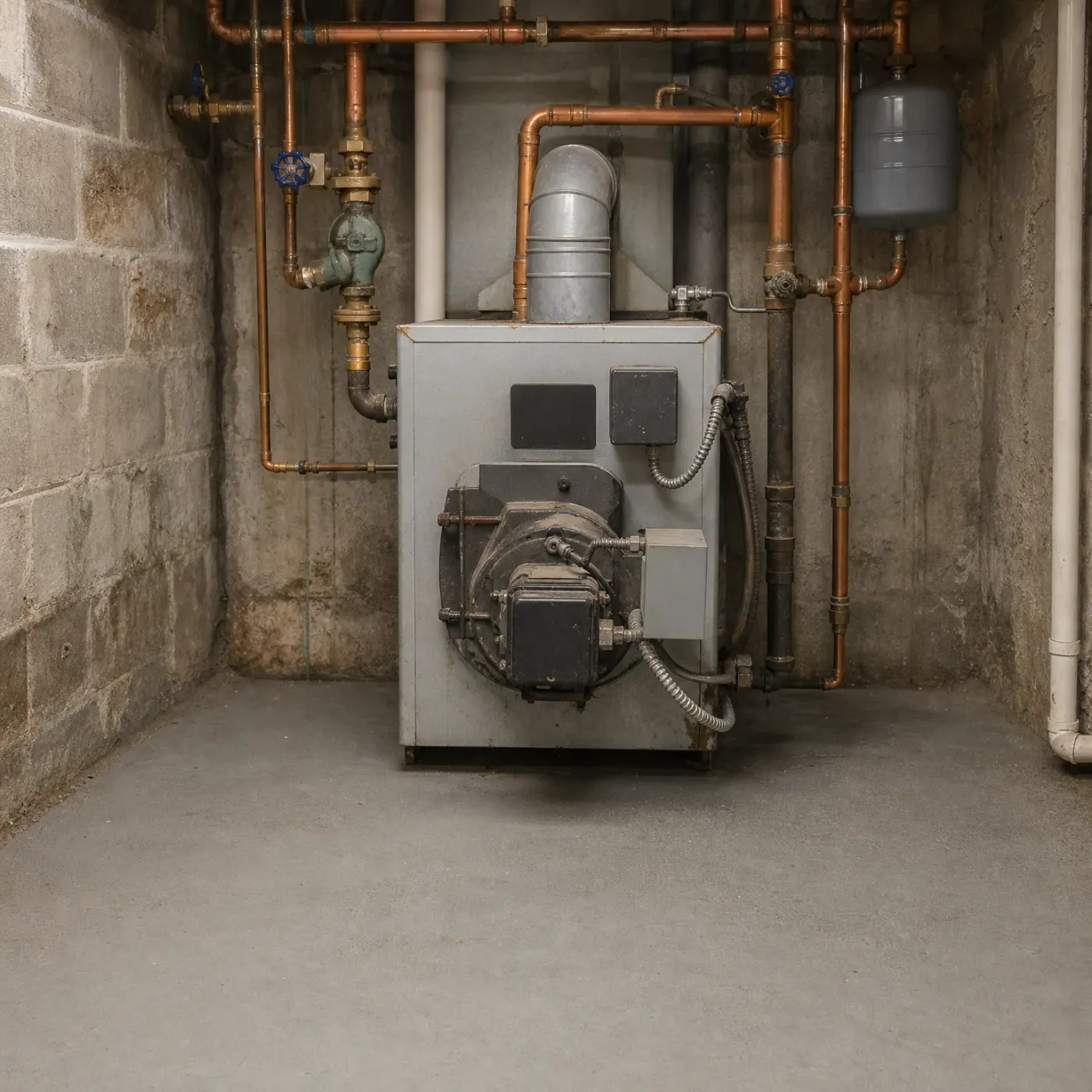
A gray floor-standing boiler with a metal flue pipe stands in the corner of a plain painted basement room, connected to copper pipes running along the wall.

What the relief valve is for

Every boiler has a pressure relief valve set to open before the system reaches a level that could strain a pipe joint or a fitting. If you hear it hiss or see water near it, the system got close to that limit. That valve doing its job once is a warning, not a fix. A contractor can check whether the cause is a feed valve stuck open, trapped air, or something else in the loop before it happens again.

Low Pressure vs. High Pressure

Low pressure

  • If the needle sits below 12 psi cold, the system may be short on water and the boiler could shut itself down on a low-pressure switch.
  • A slow leak at a bleed valve or a fitting will drain pressure over weeks, so a gauge that keeps dropping points to a leak somewhere in the loop.
  • Low pressure often shows up as a cold radiator on an upper floor, since there isn't enough water pushing through to reach it.
  • Topping off the system yourself with the feed valve works short term, but pressure that keeps falling back means something is letting water out.
  • Basements and crawlspaces in older Connecticut homes are where these leaks tend to show first, since fittings there see the most temperature swing.

High pressure

  • A cold reading above 20 psi, or one that climbs past 30 psi once the boiler is running, means the relief valve may open and drip water near the boiler.
  • Overfilling after a bleed is the most common cause, especially if the feed valve was left open a little too long.
  • A relief valve that's already worn will let go at a lower pressure than it should, so the real problem can be the valve rather than the water level.
  • High pressure puts steady strain on seals and fittings throughout the loop, not just at the valve where it's venting.
  • If the gauge keeps creeping back up after it's been bled down, the expansion tank may not be holding air the way it should.
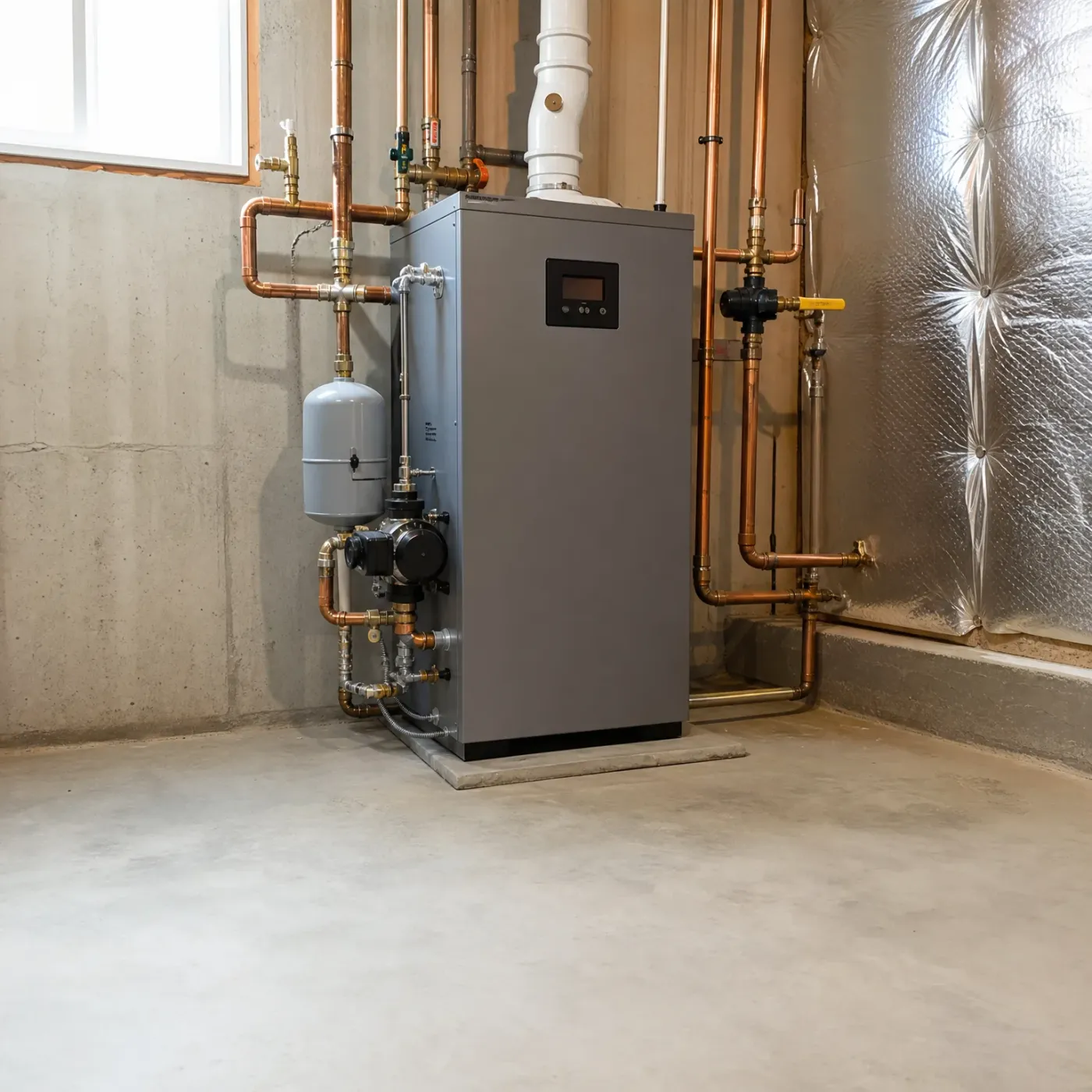
A gray boiler unit with a digital display stands on a concrete basement floor, connected to copper piping, a gas valve, a circulator pump and an expansion tank, beside a concrete wall and foil-faced insulation.

Running the way it should

This is a gauge sitting where it belongs, somewhere between 12 and 15 psi with the system cold. The pipework is tight, the expansion tank is doing its job, and nothing is weeping at the fittings. A boiler holding steady like this just needs its yearly look before another Connecticut winter.
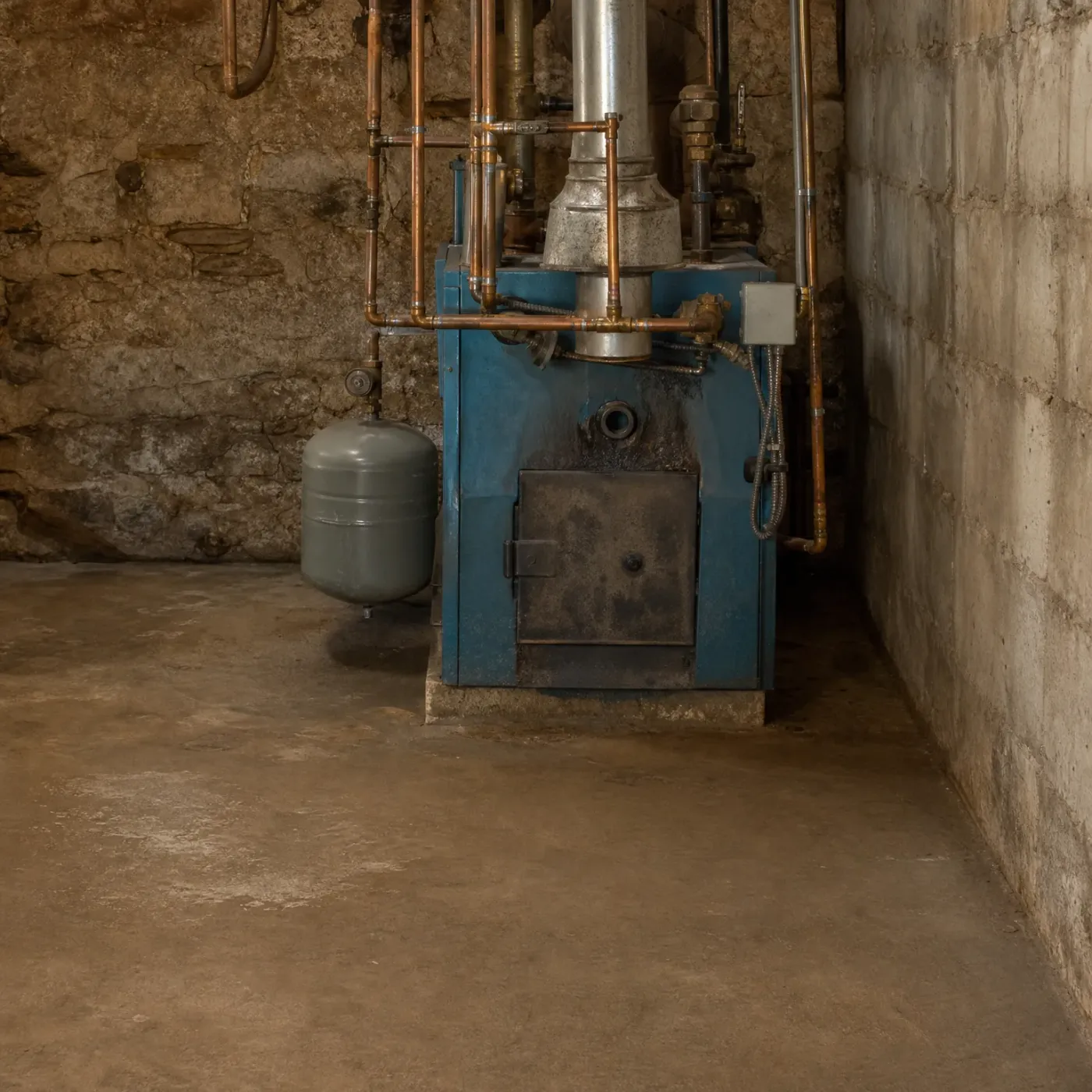
A blue cast-iron boiler with a metal flue pipe and copper piping stands against a stone and concrete block basement wall beside a gray expansion tank on a bare concrete floor.

A pressure problem waiting out

That corroded access door and the bare expansion tank on the floor are signs of a boiler that's been losing ground for a while. A unit this old drifts out of range more easily, and a slow leak here can mean a cold radiator or a shutdown on the coldest night of the year.

A gray boiler with a flue pipe and burner unit stands against a concrete block basement wall, surrounded by copper and steel piping, valves, and a gray expansion tank, on a bare concrete floor.
Before you get your boiler maintenance
A gray boiler on a concrete pad in a basement, with a metal flue pipe and copper piping, brass valves, a gray expansion tank and a circulator pump mounted on the concrete wall beside wood paneling.
After you get your boiler maintenance
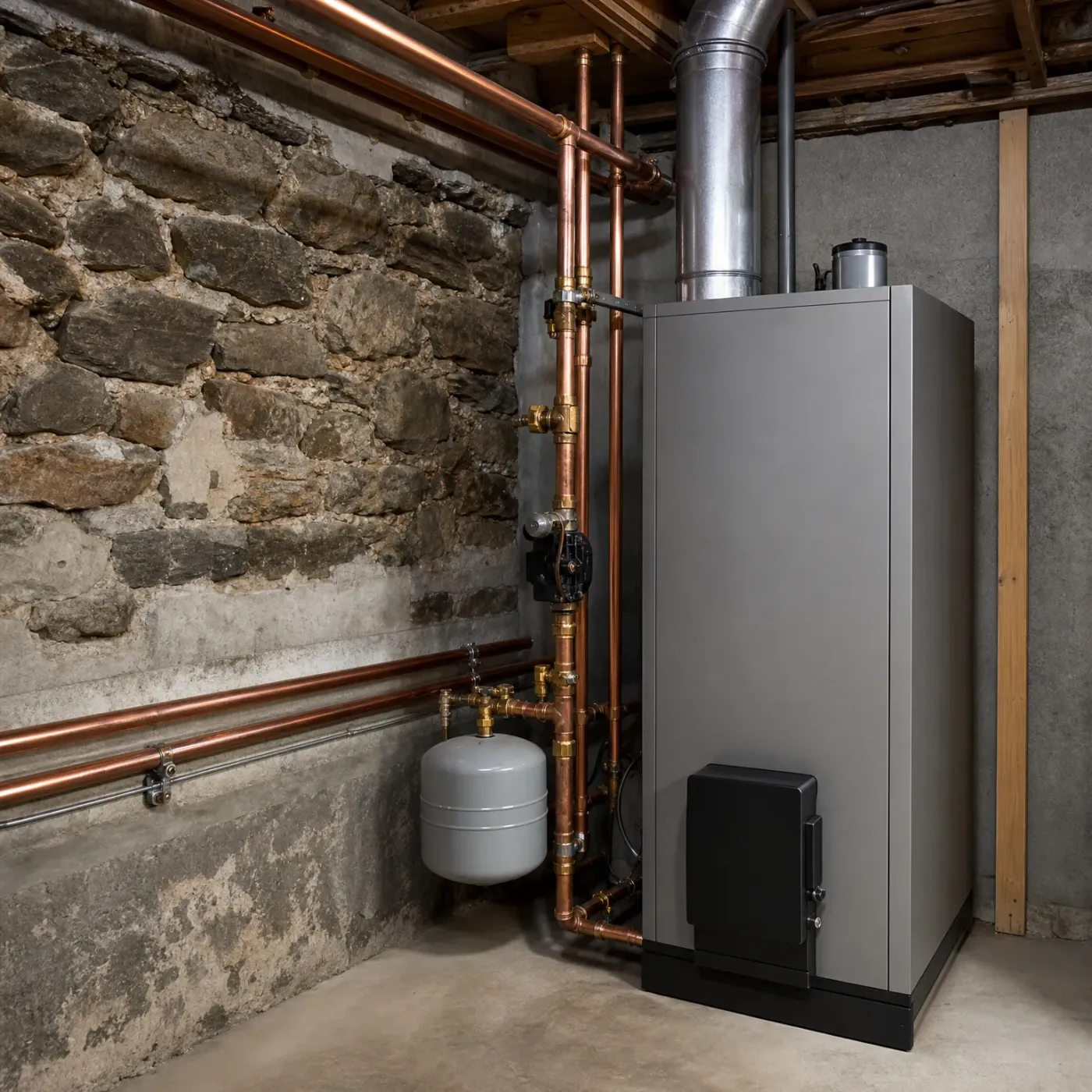
A gray boiler unit with a metal flue stands in a basement beside copper piping, valves and a small expansion tank, against a stone and concrete wall with wooden joists overhead.

A pro who works on boilers

Once you send the form, finding a pro is off your list.

Describe your boiler job, and a local pro who handles it gets in touch.

Get matched

It costs nothing to send, and you don't have to hire anyone.

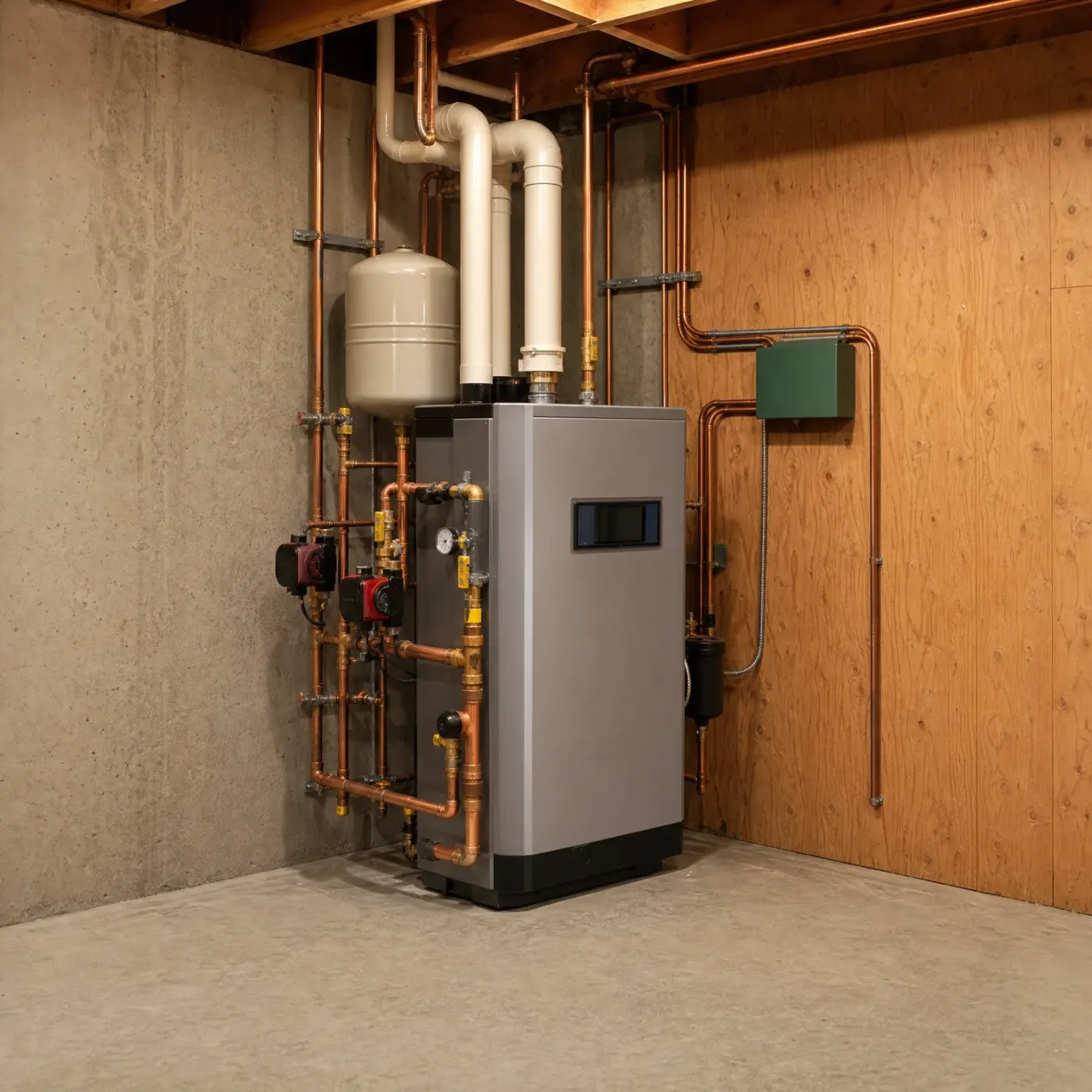
A gray floor-standing boiler in a basement corner with copper piping, two red circulator pumps, a beige expansion tank, white PVC vent pipes, concrete and plywood walls.
A boiler like this holds its pressure through a Connecticut winter without the gauge ever needing a second look.
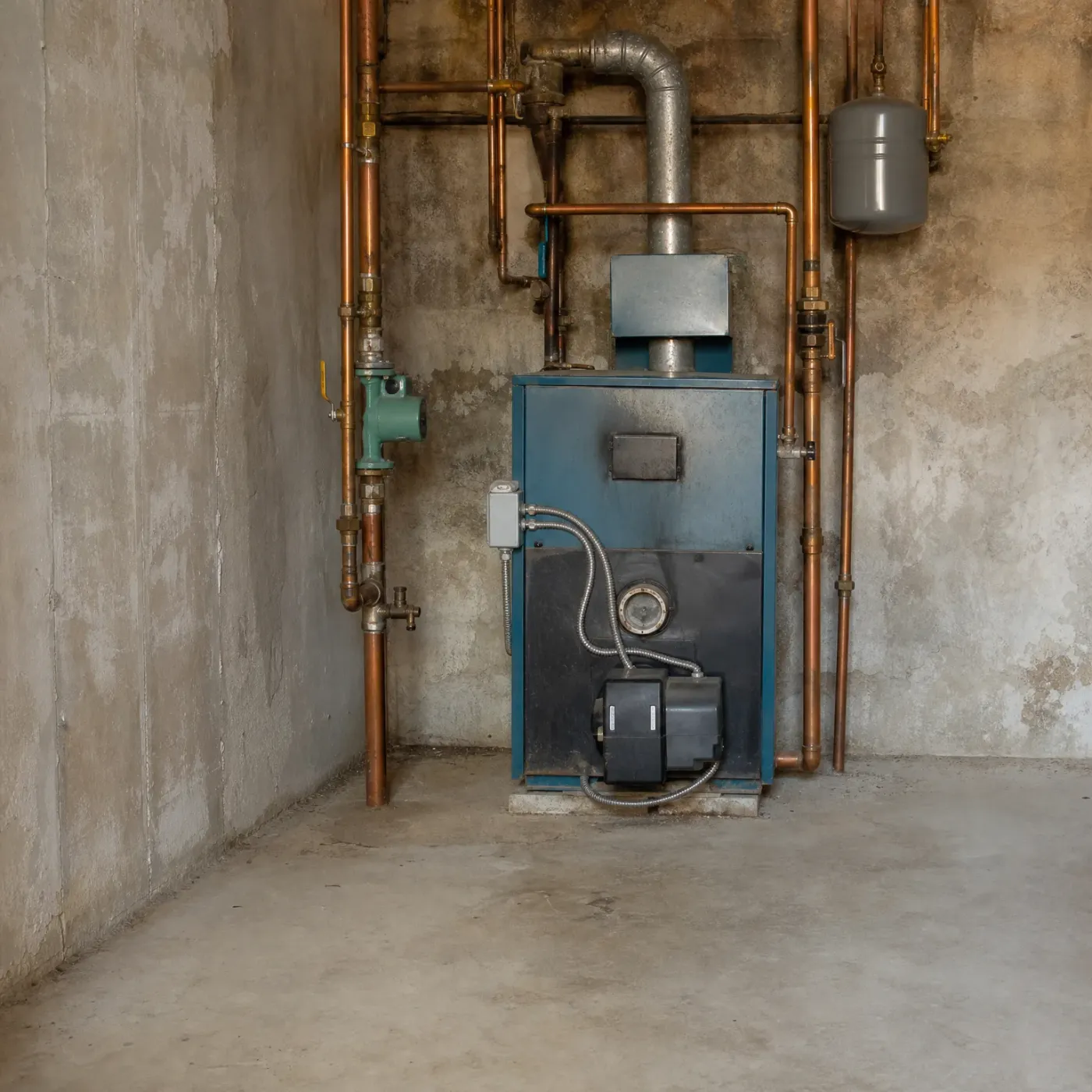
A blue residential boiler with a metal flue, pressure gauge and burner unit stands against a stained concrete basement wall, surrounded by copper pipes, a green circulator pump and a gray expansion tank.
A boiler like this is losing water somewhere in that copper, and the gauge will keep falling until someone finds where.

Cold, your boiler wants to sit between 12 and 15 psi. That number comes from how high the piping runs, not from the square footage of your house, so a split-level and a colonial can both be right at the same reading. Pressure climbing past that range cold usually means the autofeeder is adding water it shouldn't, often because a feed valve got left open after a repair and nobody closed it back down. Give it a few weeks and that slow overfill pushes the gauge well past where the 30 psi relief valve has to start venting. The expansion tank is what keeps the rise in check once the boiler fires and the water heats up. Inside it there's a bladder holding a cushion of air, and once that bladder fails, the tank fills with water instead of air and has nothing left to absorb the expansion. Pressure then climbs fast every time the burner runs. On the other end, bleeding a radiator lets air out but takes a little pressure with it, and a system bled often over a winter will need water added back to stay in range.

Why the pressure drifts

  • The relief valve is set to open at 30 psi, and a gauge pushing past 20 psi cold means the autofeeder is likely overfilling the system.
  • A feed valve left open after a repair will keep adding water every time the boiler fires, slowly driving the cold pressure up over several weeks.
  • The expansion tank has a bladder that holds a cushion of air, and once that bladder fails the tank fills with water and pressure climbs fast as the boiler heats.
  • Most residential boilers are built to run between 12 and 15 psi cold, and that range is set by the height of the piping, not by the size of the house.
  • A pressure relief valve that drips after firing is doing its job, venting water the system made room for when it shouldn't have expanded that far.
  • Bleeding air from a radiator drops pressure a little each time, so a system bled repeatedly over a winter will need water added back to stay in range.
A woman with long gray hair wrapped in a checked blanket sits on a sofa by a window with yellow autumn foliage outside, with a lamp, framed picture and plant in the background.
An older woman in a cream knit sweater sits on a sofa by a window, looking out at sunlit trees with yellow and orange autumn leaves, with a bookshelf and lamp behind her.
A woman with gray shoulder-length hair in a dark knit sweater sits on a cushioned seat by a window, looking out at yellow autumn foliage, with a living room, armchair, houseplant and framed picture behind her.
An older woman with gray hair in a bun, wearing a cream knit sweater, sits on a sofa with a gray blanket and looks out a large window toward yellow-green autumn trees, with a lit table lamp and dark armchair behind her.

A furnace blows warm air through a vent and you feel it right away. A boiler that's low on pressure just quietly shuts itself off, and you find out when a radiator upstairs stays cold on a February morning.

Catching that gauge in the fall, before the first hard freeze, means a service call on your schedule instead of a no-heat call on a night when every other boiler in Connecticut is doing the same thing.

Winter nights average 23°F statewide

Your boiler works hardest on those 23°F nights, and that's when low pressure costs you most. A radiator that won't heat is just an inconvenience in October. At 23°F, a cold room upstairs is the first thing you notice.

NOAA nClimDiv 1991-2020 county normals weighted by homes

A boiler running right in Connecticut holds somewhere between 12 and 15 psi cold, and the needle climbs a bit once the heat kicks on. That's the whole answer. If yours sits outside that range, or keeps drifting down no matter how many times you bleed a radiator, that's a system that needs a look before the cold months ask more of it than it can give. You don't have to track down who does that work or figure out whether they can even get to it before the next cold snap. Send the form and that part of it is off your plate. Someone who services boilers for a living gets your information and reaches out to you. You'll still want to know what your gauge is telling you, but you won't be the one solving it alone.

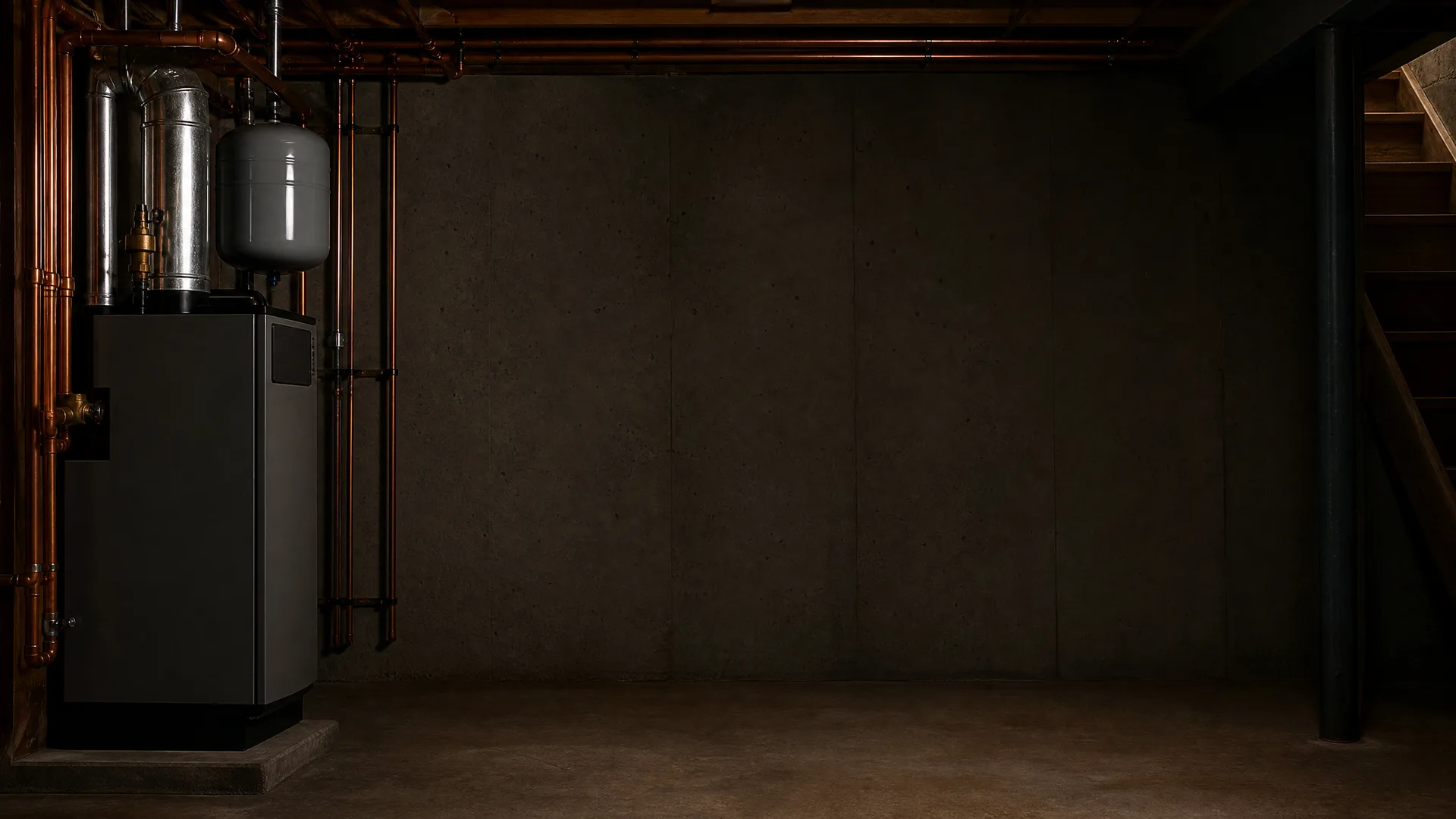
A dark basement with a gray boiler unit, expansion tank, and copper pipes along a concrete wall, with a steel support post and wooden stairs at right.

Get your boiler to the right pro

Send the form, and lining up the boiler tune-up stops being yours to chase.

Step 1 of 3: Equipment