Profile view of a bearded man wearing a dark green baseball cap and a dark gray T-shirt against a plain light background.

Why your boiler is leaking water in Connecticut

Step 1 of 3: Equipment

A leaking boiler usually comes down to pressure or a worn part letting water past it. The pressure relief valve lets go when the system builds up too much pressure, often from a faulty expansion tank. A corroded pipe fitting, a worn pump seal, or a cracked heat exchanger will also let water seep out slowly, sometimes just a damp spot near the base of the unit. None of this fixes itself, and a boiler that's low on water from a leak can overheat its heat exchanger or shut down when you need heat most. Connecticut winters run long, and a boiler out of service in January is not a small problem. Catching a leak early, before it reaches the electrical controls or wears through more than one part, usually means a simpler repair. If you've spotted water pooling, dripping, or even just a rust stain, it's worth having someone look before the next cold stretch.

A smiling man in a navy long-sleeve shirt sits at a wooden table in a kitchen and dining area, with a ceramic mug, a potted plant, and a sliding glass door behind him.
A smiling bearded man in a green henley shirt stands at a kitchen island with a gray mug, looking off to the side, with a dining area and shelves blurred behind him.
A smiling bearded man in a navy sweater sits at a white kitchen island with a ceramic mug, with open shelves, potted plants and a range hood behind him.
A smiling man in a dark olive long-sleeve shirt sits in a kitchen beside a counter with a dark mug, with a dining table, sideboard and hallway visible in the blurred background.

Water doesn't start leaking at random. It follows pressure and wear, and each path leaves its own clue. The relief valve near the top of the boiler is designed to open once pressure passes roughly 30 psi, so a damp discharge pipe means the system already hit that mark at least once. Behind that is often the expansion tank. Once it loses its air cushion, the water has nowhere to expand into except further out the relief valve, and that happens every time the burner cycles. The circulator pump has its own seal around the shaft, and when that wears, the water shows up at the pump housing, not at a fitting. Fittings themselves can loosen slowly over years of heating and cooling, opening a gap small enough to miss at a glance. Deeper still, a cast iron or steel section can corrode from the inside and weep before it ever turns into a real leak. A gauge or low-water cutoff that's failing can let the system overfill without anyone noticing until water shows up somewhere it shouldn't.

Where the water is actually coming from

  • The pressure relief valve sits near the top of the boiler and is built to open once pressure passes about 30 psi, so water dripping from its discharge pipe means it already did its job once.
  • A failed expansion tank loses its air cushion and lets the system water take up that space instead, which pushes pressure up every time the burner fires.
  • The circulator pump has a seal around its shaft, and once that seal wears, water seeps out at the pump housing rather than at a joint or valve.
  • Cast iron and steel boiler sections corrode from the inside over years, and a hairline crack there will weep water slowly before it ever becomes a steady leak.
  • Pipe fittings tightened at installation can loosen slightly as the system heats and cools season after season, and that small gap is enough for water to work through.
  • A low-water cutoff or pressure gauge that's failing can read wrong, letting the system overfill and push water out somewhere it normally wouldn't.
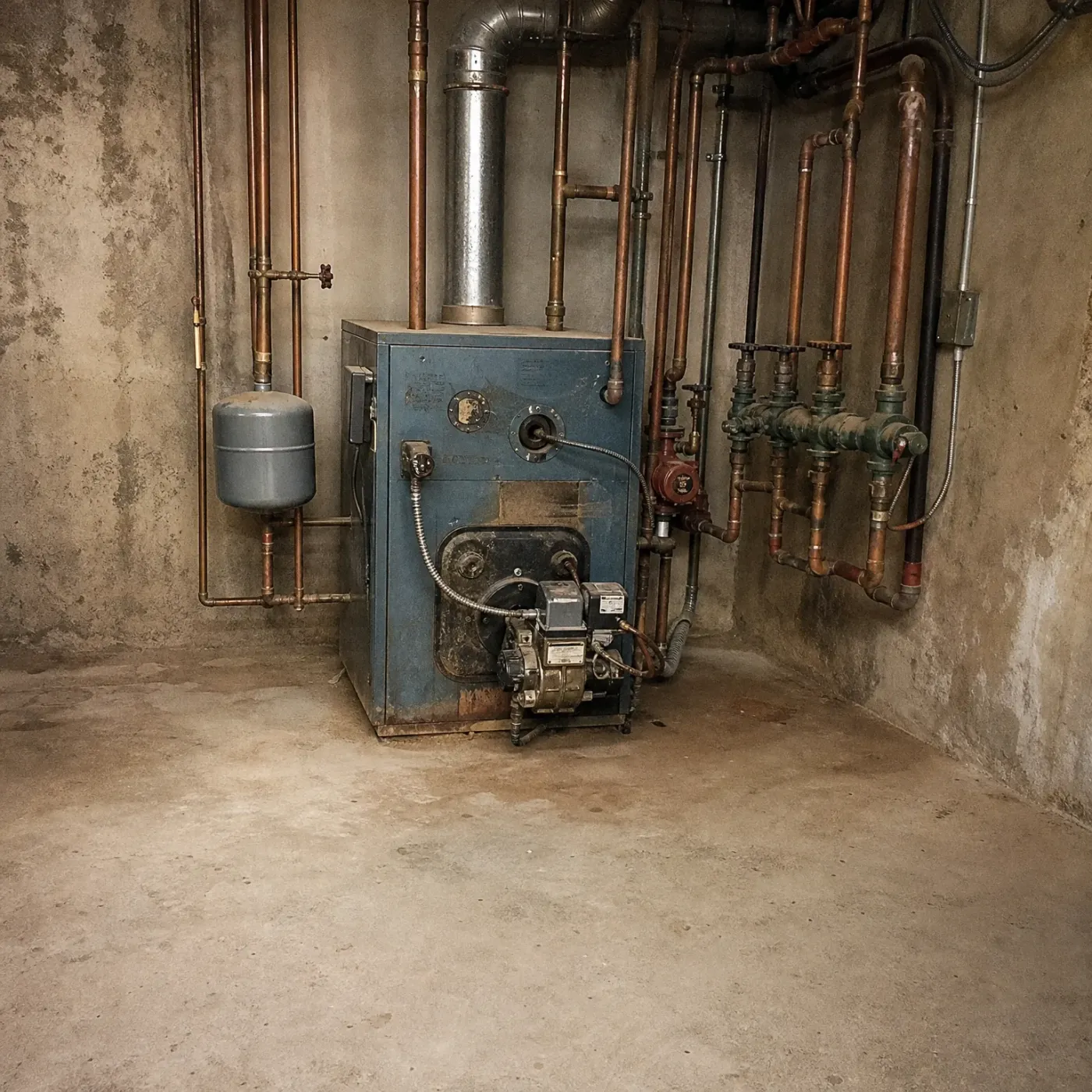
An older blue boiler with a burner unit stands in a concrete basement corner, connected to copper and steel piping, valves and a gray expansion tank on the wall.
Before you get your boiler repair
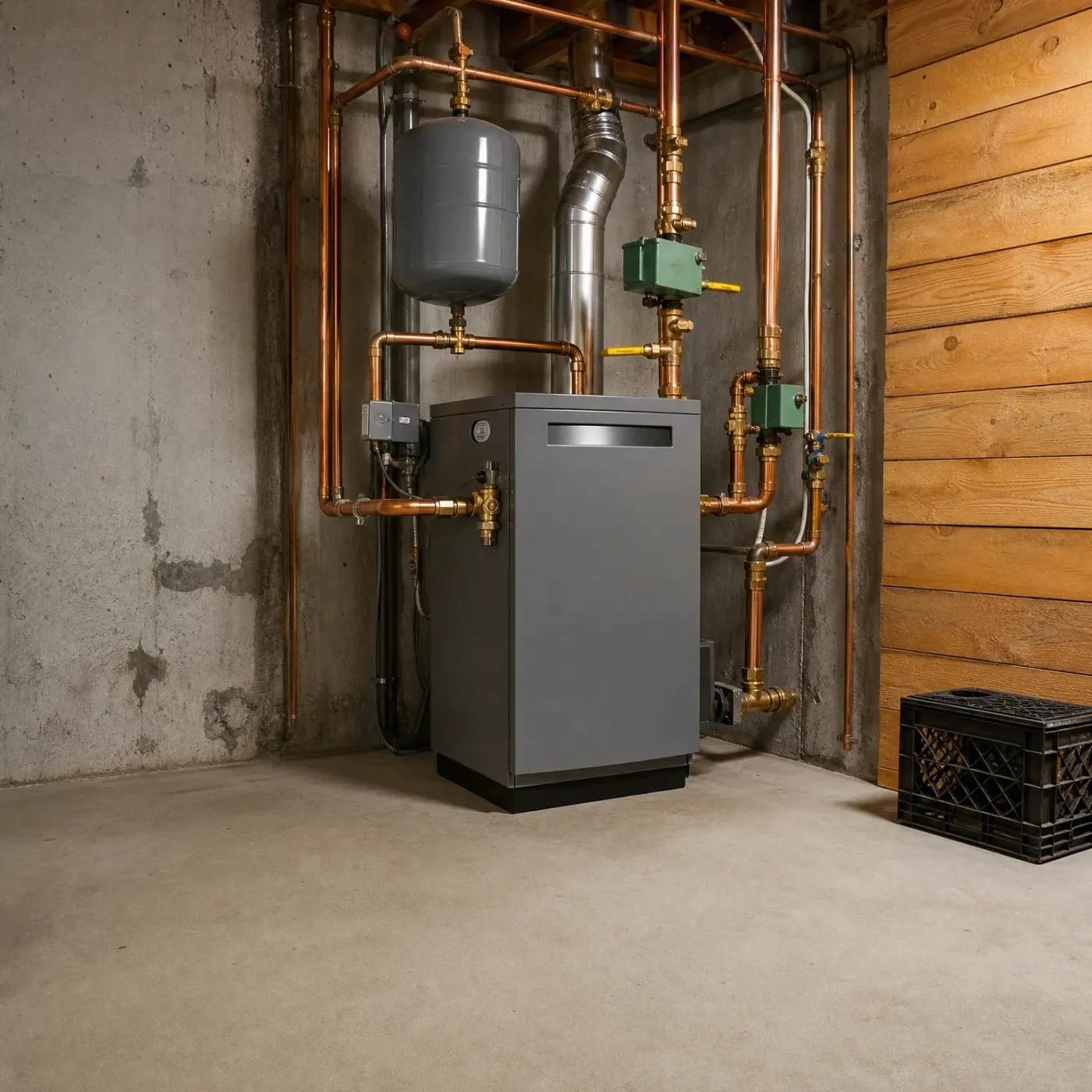
A gray boiler unit in a basement corner with copper piping, brass valves, a gray expansion tank, a metal flue duct, concrete walls and a wood-paneled wall, with a black plastic crate on the floor at right.
After you get your boiler repair

What a loose fitting tells you

A joint that weeps slowly is usually the first to go after years of heating and cooling through the system. The metal expands when the boiler fires and contracts when it shuts off, and that movement works a fitting loose over time. You might see a stain on the pipe or a small puddle that comes back after you wipe it. It rarely fails all at once. It gets worse a little each winter until it's dripping steadily instead of just damp.


Why rust spreads from one spot

Once water finds a way past a seal or a seam, it doesn't stay in one place. It runs along the pipe or down the side of the tank, and wherever it sits, the metal starts to corrode. That corrosion thins the metal further, which lets more water through, which spreads the rust further. A leak that started as a single drop can turn into a weak patch of pipe or a pitted tank wall within a season or two if it's left alone.

A man in a blue T-shirt sits on a light gray sofa, laughing while looking at an open laptop in the foreground, with a framed picture, lamp and potted plant behind him.
A bearded man in a blue and brown plaid flannel shirt stands indoors looking out a window at snow-covered trees, with a ceramic mug on the windowsill.

Hand off the boiler problem

A leaking boiler doesn't wait for a convenient week. Water finding its way out means something inside is already past the point of holding steady, and running it while you decide what to do risks the circuit board or the floor beneath it. Connecticut winters lean hard on these systems, and a boiler that's already losing water has less reserve to get through a cold stretch. With power costing what it does here, a system working against a leak is also working harder than it should, and that shows up on the bill before it shows up as a bigger repair. Finding a licensed boiler contractor on your own means calls, voicemails, and waiting for someone to have room on their schedule. Send the request once and that search is off your plate. A local contractor who services boilers all winter has likely seen this exact leak before, on a system like yours, and knows where to look first.

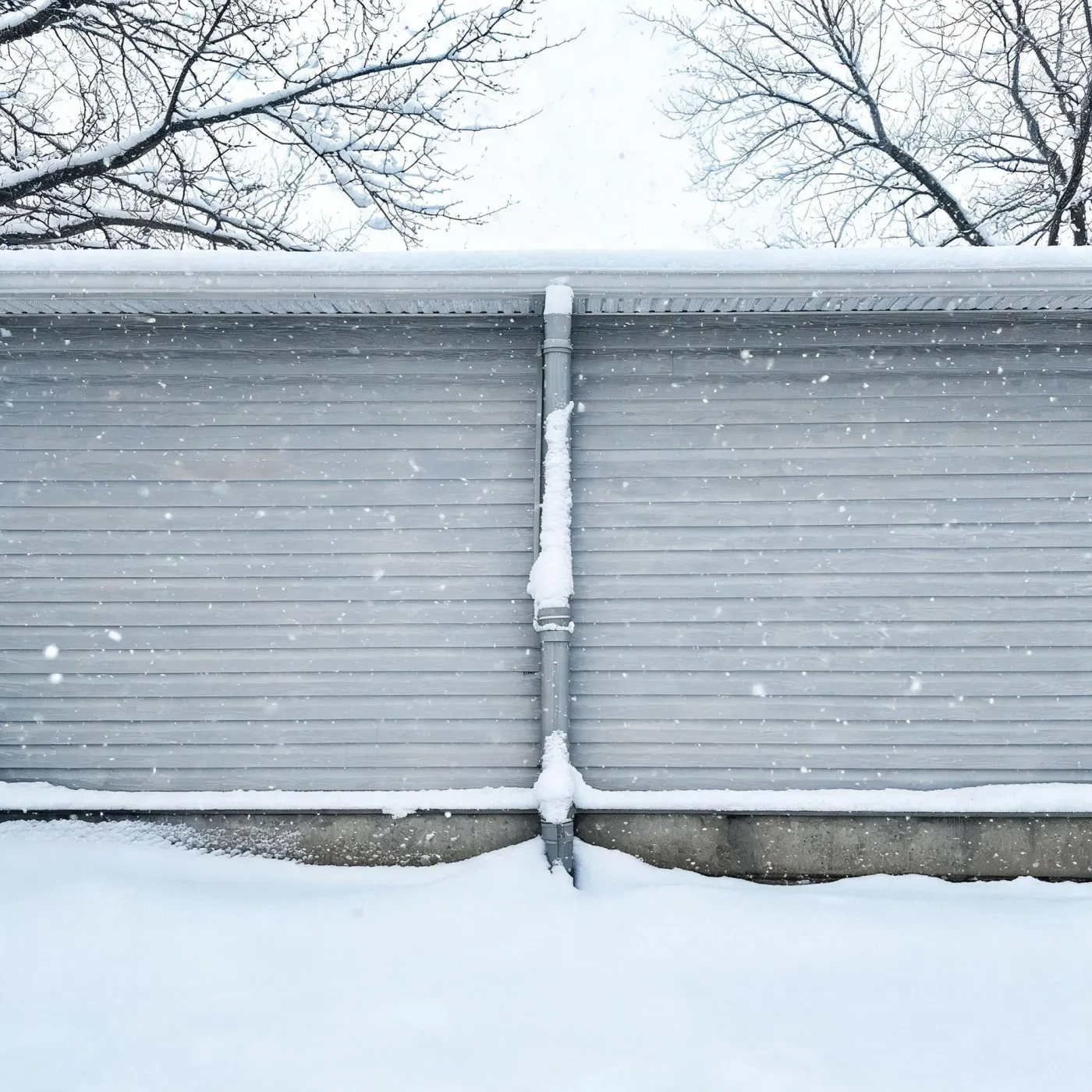
Exterior of a gray horizontal-lap-sided building with a snow-covered roof edge and a central downspout, seen during falling snow with deep snow on the ground and bare tree branches above.

Winter nights average 23°F statewide, according to NOAA climate data. At that temperature your boiler is firing often, sometimes running for long stretches through the night to keep the house warm. All that cycling puts more stress on pipe joints, the pump seal, and the pressure relief valve than a mild night ever would. A fitting that's been seeping slowly tends to show itself in this kind of cold, when the metal is expanding and contracting the most. If you're finding water near the boiler now, a hard winter night is often when a small leak turns into one you can't ignore.

NOAA nClimDiv 1991-2020 county normals weighted by homes

Is it safe to keep running my boiler if it's leaking?

You've noticed water somewhere around the boiler and the heat is still working fine, so shutting it down feels like overkill. But nobody wants to come home to a bigger mess than they started with, especially with how often this thing runs once the cold settles in for good.

No. Turn it off and shut the water feed until it's looked at.

A boiler that's leaking is already telling you something inside gave way, and water finding a path out means it's not sealed where it should be. Keep it running and that water can reach the circuit board or the burner, and either one failing costs you heat on a night when you need it most. A small drip from a fitting can turn into a steady stream once the system cycles on and off all night in a Connecticut winter. Shut off the boiler and close the water feed valve near the bottom of the unit. That stops the leak from getting worse while you wait for someone who works on these every season to find what let go.

  1. Pressure inside the boiler climbs past the safe limit.

  2. The pressure relief valve opens to release that pressure.

  3. Water escapes through the discharge pipe onto the floor.

  4. A worn seal or loose fitting lets water seep out separately.

Winter nights average 23°F statewide

At 23 below freezing most nights, your boiler isn't cycling on and off so much as staying on. Long runs like that keep every joint and seal under steady pressure for hours instead of minutes, and that's when a weak one finally gives out.

NOAA nClimDiv 1991-2020 county normals weighted by homes

Where this leaves you

  • A leak almost always traces back to pressure buildup, a worn seal, or a corroded fitting, not a mystery.
  • The pressure relief valve doing its job is a signal worth checking, not an emergency to ignore outright.
  • Long overnight burner runs through a Connecticut winter put steady strain on every joint and seal until a weak one gives out.
  • Catching a slow weep at the fitting stage usually means a smaller fix than waiting for the leak to spread.
  • A local contractor who works on boilers all season knows which part on your system tends to go first.
  • Sending one request puts the job in front of one licensed contractor instead of a pile of callbacks to sort through.

Most boiler leaks in Connecticut come down to the same short list: pressure past what the relief valve allows, a worn seal, or a fitting that finally gave up after seasons of heating and cooling. None of that is a mystery once someone's looked at the system. The relief valve opening once doesn't mean the boiler is failing. It means it did what it's built to do, and now something upstream, often the expansion tank, needs a look. A slow weep at a fitting is the cheap problem to catch. Left alone through a winter of long overnight burner runs, that same fitting, or the pump seal next to it, tends to go from a drip to a real leak.

What you're deciding right now isn't whether the boiler needs a repair. It's who does it. A contractor who works on boilers all winter in this state has seen this exact failure on systems like yours, knows which part on your model usually goes first, and won't need to guess their way through it. Sending one request means one licensed, local contractor takes the job, not a half dozen companies working the same lead. You get a straight answer from someone who's seen this before, on a system like yours, in a state where a boiler runs hard every winter.

A dark wood cabinet with a drawer and black knob holds a ceramic vase of green leafy branches and a wooden bowl, beside a window with a woven basket of knit blankets.
Sunlit interior corner with white baseboard molding, cream walls, a wood floor, a woven jute rug, and a potted green plant on a window sill with trees visible outside.
Sunlight falls across a marble countertop by a window, where a small stone bowl with pebbles sits beside a potted pothos plant in a ceramic planter and a folded beige towel.
Exterior corner of a house with lap and shingle-style siding, a white gutter and downspout with offset elbows, a stone veneer base, a window at right, and flowering hydrangea shrubs at lower left in warm low-angle light.
A wooden console cabinet with a caned front holds a ceramic vase of green leafy branches and a shallow wooden bowl, below a framed landscape print on a beige wall beside a curtained window.

Done looking for a boiler pro

Your request stays with one local pro.

Hand off my repair

No fee to send it, and nothing to sign.