Why your boiler is losing pressure in Connecticut

Step 1 of 3: Equipment

A boiler loses pressure because water is leaving the system somewhere, or because it was never bled of air correctly. Most of the time the cause is a small leak, at a valve, a pump seal, or a fitting on the pipework, and it can be slow enough that you only notice when the pressure gauge reads below 1 on the dial instead of sitting between 1 and 1.5. Connecticut winters run the boiler hard from October through March, and that steady heat cycling puts more strain on seals and joints than they see the rest of the year, so a weep that was nothing in August can turn into a real drop by January. If the pressure keeps falling after you top it back up, the leak is still there even if you can't see it. Left alone, low pressure will eventually trip the boiler off and leave you without heat on a cold night, which is the point most homeowners decide to get it looked at.

A gray boiler with a metal flue pipe stands in a basement against concrete and concrete-block walls, connected to copper piping, a circulator pump, and two gray expansion tanks.

Pressure holding steady

A gauge sitting between 12 and 15 psi, cold, means the system is sealed. No hissing at the valves, no damp spots on the pipes or around the expansion tank. The boiler fires, runs, and shuts off without you touching anything.

A gray boiler on a concrete pad in a basement with painted concrete block walls, copper piping, a metal flue, and electrical control boxes.

Pressure that keeps dropping

You add water, and a week later the gauge reads low again. That points to a leak somewhere in the pipework or a fitting that needs attention, not something to keep topping off on its own. A Connecticut plumber who services boilers all year can trace it to the actual spot.

What are you noticing around your boiler

Check the gauge first. If it keeps dropping below 12 psi a few days after you repressurize it, something is letting water out. Look for a damp patch on the floor near the boiler, a stain on the pipe insulation, or a drip from the pressure relief valve outside. You might hear a faint hiss near a valve or a fitting when the house is quiet. Radiators that are warm at the bottom and cool at the top usually mean air, not a leak, and that calls for bleeding rather than repair. Left alone, a slow leak corrodes the fittings it touches, and a boiler running low on water can shut itself down or wear parts it shouldn't have to.

  1. Water or air escapes somewhere in the sealed system

  2. Pressure in the pipes and boiler drops below normal

  3. The gauge needle falls under 12 psi

  4. Low pressure trips a switch or safety lockout

A gray-haired man in a dark sweater sits on a light gray sofa in a living room, looking toward a sunlit window with trees outside.
A gray-haired man in a dark blue sweater sits on a light gray sofa in a sunlit living room, looking off to the side, with a potted plant, shelving unit, and large glass doors behind him.
A bearded man with graying hair in a dark green sweater sits on a sofa in a living room, looking off to the side, with a sliding glass door and a dim kitchen doorway behind him.
A gray-haired man in a dark knit sweater sits on a light gray sofa in a living room, looking toward a sunlit window, with houseplants, a lamp, and framed art in the background.

12 to 15 psi

That is the range a cold boiler should hold. A local contractor who checks this gauge all winter can tell fast whether the drop is a leak or a bleed problem.

Get a licensed local pro

One lockout away

Once the needle falls under 12 psi, the safety switch cuts the burner off. A contractor licensed in Connecticut can find the leak and get it firing again.


Get a licensed local pro

Refill It Yourself or Find the Leak

Fix it yourself

  • Repressurizing the boiler through the filling loop takes a few minutes if you know where the valves are.
  • You can watch the gauge for a day or two to see how fast it drops and whether that tells you anything.
  • A one-time bleed after a cold snap might be all it needed, and the pressure holds from there.
  • If the drop keeps happening, you are back to square one with no way to see inside the sealed system.
  • A leak hiding behind a wall or under a floor will not show itself no matter how many times you refill the loop.
  • Topping off pressure on a system that is actually leaking just buys a little time before the lockout trips again.

Call a local contractor

  • Someone who services boilers across Connecticut winters knows the usual places a seal or valve starts to weep first.
  • A pressure gauge test and a look at the expansion tank can tell them whether this is a leak or a bleed issue in one visit.
  • They carry the gauges and parts for your boiler's make, so a worn valve gets replaced instead of just tightened and hoped for.
  • Matching you with one licensed local contractor means one visit, one diagnosis, not a string of calls from companies that do not know your system.
  • A repair done to code matters here, since a boiler run on guesswork pressure can trip out again on the coldest night of the year.
  • Finding the actual leak now costs less in water and in callbacks than refilling the loop every week until spring.
A woman with shoulder-length brown hair wearing a beige knit cardigan sits in a gray upholstered armchair near a window, looking off to the side with a slight smile, with bookshelves blurred in the background.
A woman with her hair in a bun holds a sleeping young child against her chest, both wrapped in a textured beige knit blanket on a sofa in a dimly lit room with a lamp, framed picture, and bookshelf behind them.

A local pro for your boiler repair

Your request goes to one pro, not a list of companies.

There's no charge for the request.

Where the water actually goes

  • The expansion tank holds a cushion of air that lets heated water expand without pushing the gauge up.
  • If that tank's internal bladder fails, it waterlogs, and the system has nowhere for the expansion to go but out the pressure relief valve.
  • A pressure relief valve that opens under normal operation is often venting because of a waterlogged tank, not a bad valve.
  • Automatic air vents on the near-boiler piping bleed off trapped air, and a stuck one can weep water slowly for weeks.
  • The filling loop or feed valve is meant to top off pressure by hand, not to stay open and feed the system continuously.
  • A pinhole leak in a baseboard or radiator section can lose water so slowly that the floor underneath dries between heating cycles.

Most of this comes down to two parts most homeowners never see. The expansion tank is a small cylinder near the boiler with a rubber bladder inside, holding a pocket of air. When water heats up and expands, it pushes into that air cushion instead of raising the pressure in the pipes. When the bladder fails, usually after years of pressure cycling, the tank fills with water instead of air. There is no more room for the expansion to go, so the system pushes the extra volume out through the pressure relief valve on top of the boiler. That valve is doing its job correctly. It is reacting to a tank that already failed. A contractor checking a waterlogged tank will often tap it. A good one sounds hollow at the top and solid at the bottom. Air vents on the pipes near the boiler have a different job. They let trapped air escape as the system fills or runs, and a stuck one can drip for weeks without ever puddling, since it only weeps a little at a time. The filling loop is meant for occasional use, topping off pressure after you bleed a radiator or after routine maintenance. If someone left it cracked open, or it does not seal fully, it will mask a real leak by quietly refeeding the system every time pressure drops.


A gray boiler unit on a concrete pad in a basement corner, connected to copper piping, valves and a metal flue against painted concrete block walls.
A sealed system like this holds its pressure for years, with copper joints and the expansion tank doing their job out of sight.
A blue oil-fired boiler with a burner unit sits on a concrete pad in a basement corner, with copper piping, valves and a gray expansion tank overhead against concrete block walls.
A boiler this old has had more chances for a joint to weep or a tank bladder to give out.
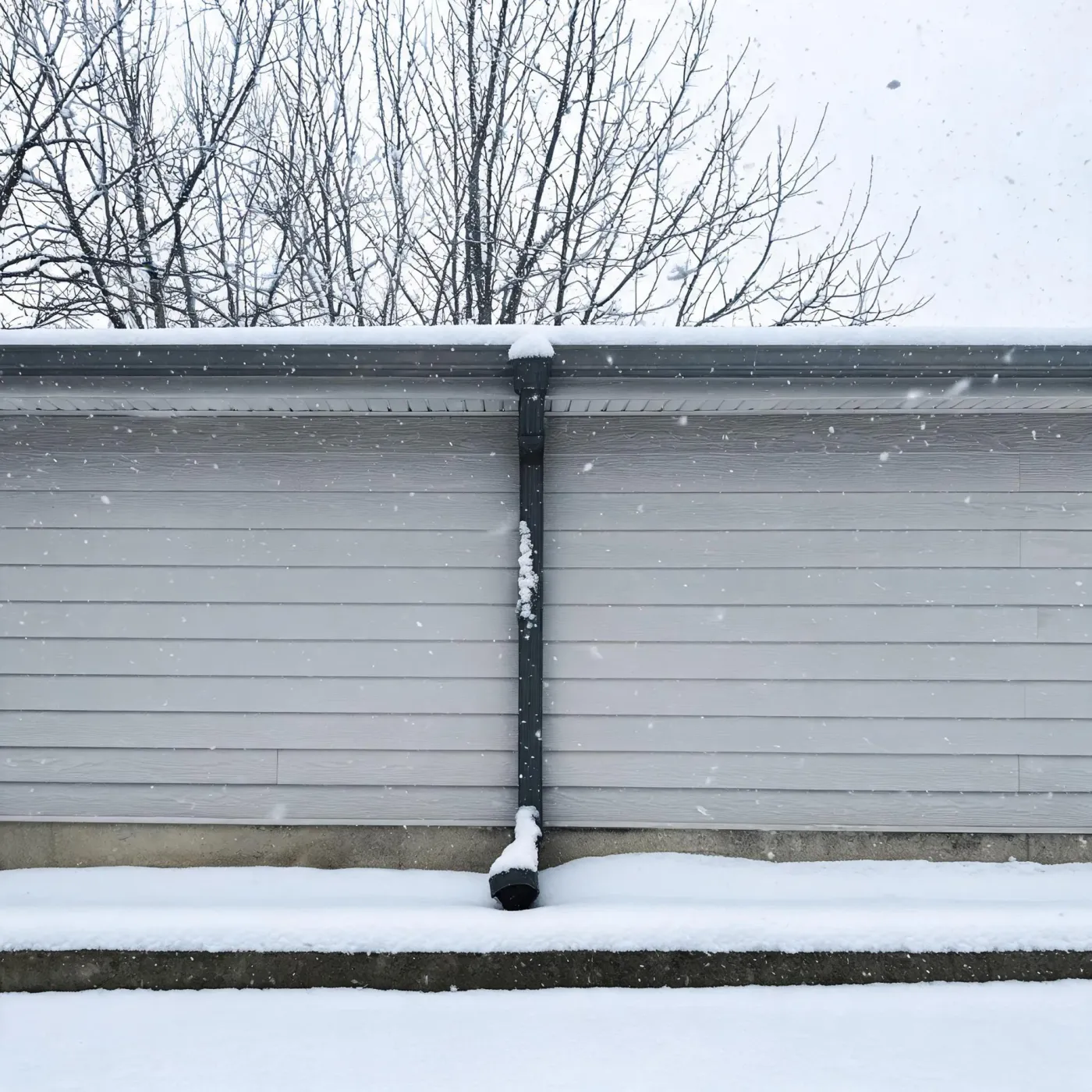
Exterior wall of a building with light gray horizontal siding and a dark downspout running to the ground, with snow on the roofline, steps, and ground, and bare trees behind during falling snow.

Winter nights average 23°F statewide, per NOAA. At that temperature your boiler is firing often, cycling on and off through the night to keep the house warm, and every cycle heats and cools the water in the pipes. That expansion and contraction puts more strain on whatever joint or seal is already weak, which is why a slow leak that held steady in October can start dropping the gauge faster once the cold sets in. If you've been topping off the pressure more often since the nights turned cold, that's not your imagination. It's the same small leak, just working harder.

NOAA nClimDiv 1991-2020 county normals weighted by homes

A smiling man in a denim shirt and white t-shirt stands in an open dark doorway of a stucco house, facing a woman with long brown hair and a green jacket seen from behind in the foreground.

A dropping gauge always has a reason

Losing pressure is not something a boiler does on its own. Water is getting out through a leak, or air got trapped somewhere it should not be, or the expansion tank has stopped doing its job. Once you know which one, the fix follows from it. Guessing at the cause, or repressurizing the same system every few weeks without finding the leak, just delays the morning it does not come back on at all.

A boiler technician who works on these systems around Connecticut all winter has seen most of what causes this, in homes much like yours, and can usually narrow it down faster than you can on your own. Getting matched with one means a single local contractor looking at your specific boiler and what it's been doing, not a general checklist. You will know where your system stands once someone who works on it regularly has actually looked at the gauge, the valves, and the tank themselves.


A gray upholstered sofa with a matching cushion sits beside a potted plant and a wooden table holding a small green plant in a stone pot, near a curtained window.
Kitchen corner with cream upper cabinets, oak lower cabinets, white marble-look countertop, beige tile backsplash, a ceramic vase of greenery, a wooden cutting board and bowl, and a black-framed window at right.
Interior corner of a room with a white-framed window and wide sill, beige walls with panel molding, a wooden cabinet holding a ceramic vase with a green leafy plant, and blurred shrubs and trees outside.
A wood-framed armchair with beige cushions and a woven lumbar pillow sits in a corner beside a large window overlooking green trees, with a tall ceramic vase holding leafy branches on the left and plaster walls and wood flooring.
Interior corner with a white-framed window above a sill, beige walls with baseboard molding, a greige shaker-style cabinet with brass knobs and a potted plant on top, light wood flooring and a woven jute rug.
A dark-framed six-pane window with white trim and sill set in gray horizontal lap siding, with hydrangea shrubs below and a white column and shingled roof section at left.

Get the right pro for your boiler

The pro who reaches out is licensed in Connecticut.

Get my match

You only hire the pro if you want to.